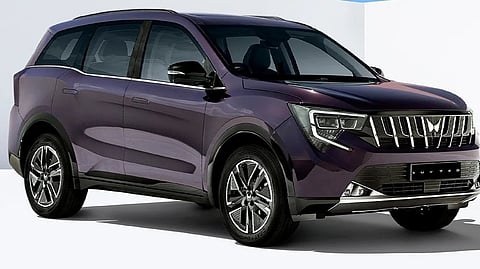

India’s passenger vehicle market witnessed a quiet but decisive power shift in 2025, according to Aditya P Kandasamy, an automobile market analyst. Writing in www.medianews4u.com, Kandasamy points out that Mahindra has climbed to the second spot in overall sales, while Tata Motors consolidated its position at No. 3, overtaking several long-established global manufacturers.
The change was not driven by aggressive discounting or short-term demand spikes. Instead, it reflected a deeper transformation in buyer behaviour--and the growing confidence of Indian automakers in setting the market agenda. For the first time in decades, domestic manufacturers are actively redefining what Indian consumers expect from a car.
Indian car buyers have become markedly more discerning. Safety ratings, durability, service quality, resale value, and suitability for Indian road and climate conditions now play a far greater role in purchase decisions than brand legacy alone. Ownership experience has emerged as a decisive factor, especially in a market where vehicle prices and running costs remain sensitive.
This shift has favoured manufacturers that design products ground-up for India rather than adapting global platforms. The result has been stronger consumer trust and more stable volumes for domestic original equipment manufacturers (OEMs).
Mahindra’s rise to the No. 2 position was driven by a focused product strategy anchored in SUVs such as the Scorpio-N, XUV700, Thar, and XUV3XO. These models performed strongly across both urban and semi-urban markets, supported by better production planning and shorter waiting periods.
Rather than competing purely on price, Mahindra leaned on mechanical robustness, platform consistency, and real-world performance. This engineering-led approach helped the brand build credibility and sustain demand, even as competition intensified.
Tata Motors’ steady climb to third place reflects long-term consistency rather than rapid expansion. Models such as the Nexon, Punch, Harrier, and Safari continued to deliver reliable volumes, backed by strong safety credentials and improved build quality.
The brand’s wide service network and controlled cost of ownership have reinforced its appeal among family buyers and first-time car owners. For many consumers, Tata has become synonymous with safety and dependability — a perception that translated into sustained market share.
Electrification emerged as a critical lever in the market realignment. Tata Motors’ early investments in electric mobility positioned it as the clear leader in the passenger EV segment. The Nexon EV and Tiago EV helped move electric vehicles from niche adoption to practical, everyday use, supported by expanding charging infrastructure.
Mahindra’s entry into the EV space with models such as the BE6 and XEV9E, alongside newer launches and an expanding pipeline built on its INGLO EV architecture, marks the next phase of competition. With regulatory pressure and fuel economics evolving, electrification is no longer optional — it is central to long-term growth.
The rise of Mahindra and Tata in 2025 points to a structural transformation in India’s auto industry. Domestic manufacturers are now capable of developing scalable platforms, integrating advanced technologies, and responding swiftly to market changes.
More importantly, Indian brands have reached a stage where they can leverage engineering and technology with confidence. As mobility moves towards electrification and connectivity, they are no longer just following global trends — they are increasingly shaping them.

