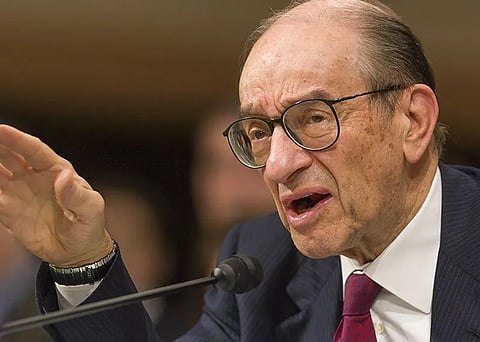

The death of former US Federal Reserve chairman Alan Greenspan this week at the age of 100 marks the end of one of the most influential chapters in modern economic history. For nearly two decades, Greenspan stood at the centre of global finance, overseeing the world's most powerful central bank during a period of low inflation, steady growth and rising confidence in free-market economics.
Greenspan led the US Federal Reserve from 1987 to 2006, serving under four US presidents—Ronald Reagan, George H.W. Bush, Bill Clinton and George W. Bush. His tenure coincided with the stock market crash of 1987, the Asian financial crisis, the dot-com boom and the early years of the US housing boom. His calm handling of financial shocks earned him the nickname "The Maestro", and his words were closely watched by investors worldwide.
Under Greenspan, the US economy enjoyed one of its longest periods of expansion. Low inflation and relatively stable growth led many economists to believe that central banks had mastered macroeconomic management. His influence extended well beyond the United States, with policymakers across the world embracing market-oriented reforms and deregulation.
However, Greenspan's legacy became deeply controversial after the global financial crisis of 2008.
Throughout his tenure, he opposed stricter regulation of banks and financial markets, arguing that market forces were better equipped than governments to manage risk. He also supported the rapid growth of complex financial products linked to US housing loans.
These policies contributed to the build-up of the subprime mortgage bubble. When the US housing market collapsed, the resulting financial crisis triggered failures across the banking system, forcing unprecedented government bailouts and pushing the global economy into the deepest recession since the Great Depression. The crisis also spilled into Europe, contributing to the euro zone debt crisis.
Although Greenspan had left office before the crisis erupted, many economists blamed his deregulatory approach and prolonged period of low interest rates for creating the conditions that allowed financial risks to accumulate. In testimony before the US Congress in 2008, Greenspan acknowledged that the crisis had exposed flaws in his long-held belief that financial institutions would effectively regulate themselves.
His successors, Ben Bernanke and Janet Yellen, introduced extraordinary monetary measures to stabilise the financial system, though the economic and fiscal costs continue to shape policy debates today.
Greenspan remained an influential voice in economic discussions long after leaving office, retaining admirers for his commitment to free markets. Yet the global economy has evolved in ways that challenge many of his assumptions. China's greater role in economic planning, industrial policy and state intervention has increasingly influenced governments worldwide, even in advanced Western economies that once championed deregulation.
Greenspan's career remains a study in contrasts—celebrated for guiding the US through years of prosperity, yet criticised for policies that helped pave the way for one of the world's worst financial crises. His legacy continues to influence debates over central banking, financial regulation and the balance between markets and government oversight.

