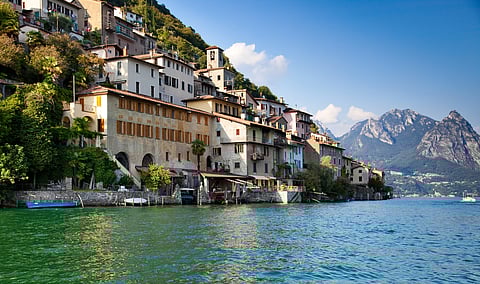

In most cities, paying for your burger with bitcoin is the stuff of tech-bro fantasy. But in Lugano — the picture-perfect Swiss city wrapped around a shimmering Alpine lake — it’s for real. From McDonald’s counters to luxury boutiques, Lugano has quietly transformed into Europe’s most enthusiastic crypto playground, where 350 shops, cafés and even the local council now say “Sì, bitcoin accepted here”.
Inside a McDonald’s overlooking Lake Lugano, a French tourist named Nicolas taps his mobile wallet against what looks like a standard card terminal. Except it isn’t — it’s a crypto-only payment machine handed out free by the city authorities. His 0.00008629 bitcoin payment (roughly $8.80) goes through instantly. To him, paying with bitcoin is “freedom from middlemen”, a system he believes will outgrow traditional finance.
Lugano’s crypto pivot began in earnest in 2022 with “Plan B”, a city-backed initiative with stablecoin issuer Tether. Its aim: make Lugano a European bitcoin hub. Since then, everything from pre-school fees to high-street purchases can be settled in crypto. For small retailers, the appeal is simple — lower processing charges. Bitcoin transactions cost him under 1percent, compared to as much as 3.4percent for credit cards. Business isn’t booming yet, he admits, but he believes adoption will “grow like a tree”.
Crypto diehards insist the system is usable enough to survive on. Plan B’s director, Mir Liponi, says she managed 11 days solely on bitcoin when her bank froze her account — though she notes some gaps remain, such as public transport, fuel, dentists and energy bills.
Still, Lugano’s experiment isn’t without detractors. Some residents dislike the city’s crypto evangelism; vandals even destroyed a lakeside statue of bitcoin’s creator, Satoshi Nakamoto. Others worry about crypto’s associations with crime, speculation and sudden crashes.
Economists are wary too. Prof Sergio Rossi warns of bitcoin’s extreme volatility and the risk that a digital wallet provider could fail — wiping out funds instantly, unlike bank deposits protected by Switzerland’s deposit guarantee scheme.
Mayor Michele Foletti, however, insists crypto is a net positive. He dismisses fears that Lugano might attract illicit money, arguing that cash remains far more attractive to criminal networks. More than 110 crypto firms have now set up shop in the city, and he believes the momentum is only beginning.
In Lugano, bitcoin isn’t replacing Swiss francs — but it is becoming surprisingly routine. And if the mayor’s vision holds, Alpine lakeside crypto life may soon be more than just a novelty.
