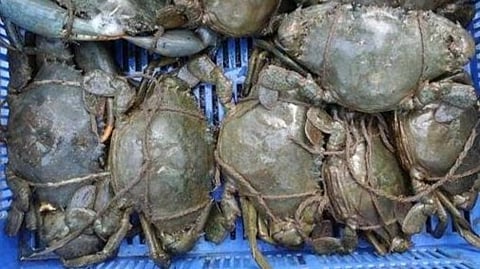


A Kochi-based aquaculture startup is trying to turn crab farming into a more predictable and profitable business by combining controlled farming systems with value addition. Its crab-fattening model, the company says, can transform a crab bought for around ₹600 into a premium product worth as much as ₹3,200 within 30-45 days.
Stem Systems, founded by former students of Kerala University of Fisheries and Ocean Studies (KUFOS), is building its business around scientific aquaculture methods designed to reduce farmers’ dependence on weather and natural water conditions.
The startup was founded in 2022 by Arun Das NH and his wife, Aswathy T, while they were pursuing their master’s degrees. Their interest in aquaculture began during their undergraduate studies at KUFOS in Panangad, near Kochi.
Extreme weather events, fluctuating temperatures, drought, heavy rainfall and floods have made conventional fish farming increasingly difficult. Poor water-quality management can also lead to the rapid spread of bacterial and viral diseases.
Stem Systems is attempting to address some of these risks through controlled and technology-driven farming models.
The startup uses systems such as biofloc, recirculatory aquaculture systems (RAS) and cage farming. The idea is to give farmers greater control over water quality and farming conditions while reducing exposure to weather-related losses.
The experience of farmers during the devastating 2018 floods was one of the factors that encouraged the founders to focus on indoor and scientific farming, Arun told Dhanam Online.
The company has also received recognition from the Union government. It won ₹10 lakh in the Fisheries Grand Challenge 2.0 conducted by the Department of Fisheries and was selected among India's top 10 fisheries startups.
One of the startup's key innovations is aimed at overcoming a basic challenge in crab farming — access to suitable saline water.
Stem Systems has developed what it calls ‘Kayal Salt’, which can be added to freshwater to quickly create water with salinity similar to that of backwaters. This allows crabs to be farmed on land instead of depending entirely on natural backwater locations.
The company has also developed a bucket-based crab-farming system that can be used indoors, somewhat like maintaining an aquarium. Its RAS technology allows used water to be treated and reused, potentially reducing water consumption.
These controlled systems could make crab farming more accessible to farmers who do not have direct access to suitable brackish-water locations.
Rather than focusing only on conventional crab cultivation, Stem Systems is placing greater emphasis on crab fattening — a value-addition process that can significantly increase the market value of the animal.
In this process, crabs with liquid gonads are fattened until the contents develop into meat, creating a premium product.
According to Arun, the company can buy crabs for around ₹600 and, after 30-45 days of fattening, turn them into products valued at up to ₹3,200. The additional cost of the process is estimated at ₹100-400 per crab.
This model could offer farmers a different route to profitability: instead of relying only on the volume of crabs produced, they can potentially earn more by increasing the value of each crab.
Stem Systems is also attempting to create an ecosystem around its farming technology.
The startup provides technical knowledge to farmers working with it and buys back the crabs they produce. The products are then sold through premium outlets.
Its own brand, Crab Story, has a presence in premium markets in cities such as Bengaluru and Hyderabad.
The company is also targeting overseas markets. Its crab products are exported to markets including Singapore, China, Thailand and Malaysia. At present, exports are routed through intermediaries, but the company plans to begin direct exports from this month.
Stem Systems is positioning itself as more than a farming company. It also operates a fisheries service centre at the fisheries university in Kochi with support from the Union government.
Farmers and students can visit the centre to learn about farming techniques, test water quality and seek assistance in identifying fish diseases.
For the founders, the larger opportunity lies in making aquaculture more scientific, controlled and commercially viable.
As climate-related risks increase, technologies that allow farming to be carried out in controlled environments could become increasingly important. Stem Systems is betting that the combination of technology, value addition and assured market access can help make aquaculture a more viable business for farmers in Keralam.
