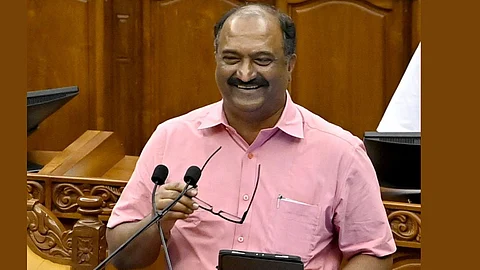

Kerala Finance Minister K N Balagopal on Thursday presented the state budget for 2026–27, the last full budget of the current LDF government ahead of next year’s Assembly elections, with a clear focus on social welfare, income support, and public infrastructure.
The budget places strong emphasis on pensions, frontline workers, and vulnerable sections, while also outlining spending plans for transport, education, healthcare and employment generation. Presenting the budget in the Legislative Assembly, the finance minister said the government’s approach remains people-centric despite fiscal constraints and reduced central transfers.
₹14,500 crore has been earmarked for social security pensions, reinforcing the government’s welfare-focused approach.
The monthly welfare pension will be increased to ₹2,000, benefiting elderly citizens, widows and other eligible groups.
ASHA and anganwadi workers will receive a ₹1,000 monthly hike, while anganwadi helpers will get ₹500 more per month. Noon-meal cooks’ daily wages will rise by ₹25.
The government announced phased clearance of pending DA and DR arrears for employees and pensioners, along with the formation of a new Pay Revision Commission.
A separate elderly budget document will be introduced to address the specific needs of senior citizens.
₹100 crore has been allocated for preliminary works on a state-wide Regional Rapid Transit System from Thiruvananthapuram to Kasaragod.
Road infrastructure received a major boost, with ₹5,217 crore set aside for the first phase of widening the MC Road into a four-lane highway between Thiruvananthapuram and Angamali.
A Chief Minister’s “Connect to Work” scholarship scheme was announced to support educated but unemployed youth through financial aid and job facilitation.
Students in government and aided arts and science colleges will benefit from fee waivers aimed at reducing education costs.
Healthcare and worker welfare allocations were strengthened, including higher funding for the Karunya health insurance scheme, cancer and elderly care programmes, and expanded insurance cover for auto and taxi workers.
A major highlight of the budget is the allocation of ₹14,500 crore for social security pensions. The government also announced an increase in the monthly welfare pension to ₹2,000, aimed at easing financial pressure on elderly citizens, widows and other beneficiaries. In a first, the state will present a separate elderly budget document alongside the main budget to address issues specific to senior citizens.
Frontline community workers received significant attention. Accredited Social Health Activists (ASHA) and anganwadi workers will get a ₹1,000 monthly hike in their honorarium. Anganwadi helpers will receive an additional ₹500 per month, while noon-meal cooks will see their daily wages increased by ₹25. The government also announced a ₹1,000 monthly hike for pre-primary teachers and literacy instructors.
For government employees and pensioners, the budget proposes steps to clear pending DA and DR arrears in phases. A new Pay Revision Commission will be set up to review salary structures, responding to long-standing demands from employee organisations.
Infrastructure and transport projects feature prominently. The budget allocates ₹100 crore for preparatory works related to a state-wide Regional Rapid Transit System corridor from Thiruvananthapuram to Kasaragod, seen as an alternative to the stalled SilverLine project. Road development also received a boost, with ₹5,217 crore earmarked for the first phase of widening the MC Road into a four-lane highway between Thiruvananthapuram and Angamali.
Employment and education initiatives form another key pillar. The budget sets aside funds for a Chief Minister’s “Connect to Work” scholarship scheme, aimed at supporting educated but unemployed youth through financial assistance and job facilitation. Fee waivers were announced for students in government and aided arts and science colleges, easing the burden on middle- and low-income families.
Healthcare allocations include enhanced funding for the Karunya health insurance scheme and targeted programmes for cancer treatment and elderly care. Additional resources were also earmarked for the rural employment guarantee scheme and insurance coverage for auto-rickshaw and taxi workers.
While the government described the budget as balanced and socially responsible, opposition parties criticised it as election-oriented and raised concerns over fiscal sustainability. Responding to the criticism, the finance minister said Kerala’s financial stress is largely due to constraints imposed by the Centre, including limits on borrowing and delays in fund releases.
Overall, the budget reflects the government’s attempt to combine welfare expansion with selective infrastructure investment, as the state heads into a politically crucial year.

