

Copper prices have surged to record levels, raising concerns about higher costs for electric vehicles, air conditioners, refrigerators, electrical equipment and even home construction.
The red metal recently touched an all-time high of around $14,858 a tonne before easing to about $14,240. The rally has been driven by concerns over global supply, strong demand from electrification and infrastructure, and uncertainty over possible US tariffs on copper.
The impact could be particularly visible in Keralam, where demand for electric vehicles, air conditioners and rooftop solar systems is growing.
Copper is extensively used in electric motors, wiring, batteries and other electrical systems.
A conventional petrol or diesel car typically uses around 20–25 kg of copper.
Some electric cars require 80–85 kg.
A petrol two-wheeler uses around 2.5–3 kg, compared with 8–10 kg in an electric model.
The increase in copper prices could add ₹10,000–₹13,000 to the manufacturing cost of a conventional car, while the impact on some EVs could exceed ₹40,000.
Manufacturers may not pass the entire increase on to buyers immediately. However, if copper remains expensive, vehicle prices could rise or companies may reduce discounts and other incentives.
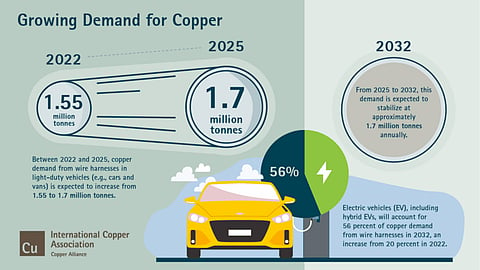
Global EV demand remains strong, adding to the long-term pressure on copper.
Air-conditioners are another major copper user, particularly through their tubing, wiring and heat-exchange systems.
For a 1.5-tonne split AC, the increase in manufacturing cost could be around ₹3,300–₹4,500. A double-door refrigerator could see an additional cost of ₹1,300–₹1,800.
Retail prices may not rise immediately because manufacturers and retailers can continue selling existing inventory. But newer batches could become more expensive if copper prices remain elevated.
For Keralam, where hot and humid weather is driving greater AC adoption, the impact could be significant.
Copper is used in electrical wires and cables, motors, pumps, transformers, lifts and generators.
Copper prices have risen more than 12 percent between April and September. This could add roughly 0.75–1 percent to overall construction costs.
That may appear modest for an individual home, but the impact can be substantial for large villas, apartment projects, hospitals, hotels and commercial buildings.
The push towards rooftop solar and EV charging infrastructure could also face higher input costs.
Solar cables, inverters, transformers and power-distribution systems use copper. Manufacturers are exploring aluminium as a substitute in some applications, but it cannot replace copper everywhere.
Small manufacturing units making electrical panels, cables, motors, transformers, printed circuit boards and connectors could face greater margin pressure.
Large companies have more room to stock raw materials in advance or use price-hedging arrangements. Smaller businesses often have less financial flexibility, making sustained copper inflation a bigger challenge.
The latest rally reflects a combination of tightening mine supply, changing global trade flows and expectations of sustained demand from power grids, EVs, renewable energy and AI data centres. Global copper mine production declined 1.1 percent in the first half of 2026, adding to supply concerns.
If copper prices stay at record levels, the impact will gradually move from commodity markets to household budgets.
