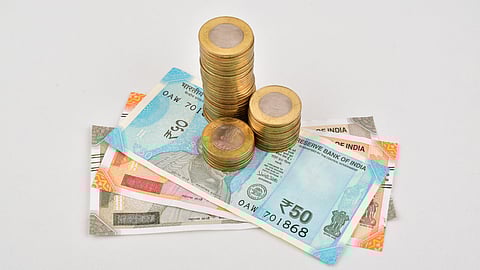

India is rapidly becoming a digital-payments economy. UPI transactions are approaching a billion a day, millions of merchants accept QR-code payments and more than 550 million people use the Unified Payments Interface.
Yet Indians are holding more physical cash than ever.
The Reserve Bank of India now has around 176 billion banknotes in circulation. It prints roughly 28–30 billion new notes across six denominations every year and withdraws about 21 billion worn-out notes.
This apparent contradiction is becoming a challenge for policymakers. Digital payments are reducing the role of cash in everyday transactions, but they are not reducing the overall demand for currency.
The phenomenon has been described as the “cash paradox”.
The simplest explanation is that cash does much more than facilitate transactions.
Economists broadly identify three functions of money:
Payment: Used to buy goods and services.
Store of value: Held as savings or readily accessible wealth.
Insurance: Kept aside for emergencies, disruptions and uncertainty.
UPI and other digital payment systems have transformed the first of these. They have made transferring money faster, cheaper and more convenient. But they cannot entirely replace the other two.
A household may use UPI for vegetables, groceries, bills and restaurant payments while still keeping a portion of its savings in cash. Businesses may increasingly accept digital payments while maintaining cash balances to meet immediate requirements.
This helps explain why the value of currency in circulation can continue to rise even when cash accounts for a declining share of transactions.
The scale of India's currency infrastructure is enormous. Cash reaches consumers and businesses through RBI offices, bank branches, more than 2,50,000 ATMs and cash dispensers, and millions of business correspondents serving smaller towns and rural areas.
The volume of Indian banknotes is particularly high because the country uses a large number of lower-denomination notes. More notes are therefore required to represent the same monetary value than in economies dominated by high-value banknotes.
The trend is not unique to India either. The US has roughly 56 billion banknotes in circulation, while the euro area has around 30 billion euro banknotes. The value of euro banknotes in circulation has risen sharply over the past decade even as the proportion of retail payments made with cash has fallen.
One of the biggest reasons for the persistence of cash is uncertainty. Power failures, internet outages, cyberattacks, banking disruptions and natural disasters can temporarily cripple digital payment systems. Cash, by contrast, does not require a network, electricity, a smartphone or a functioning payment application.
This has become increasingly relevant globally.
Several European countries have advised households to maintain a small amount of cash at home as protection against disruptions to electronic payments.
For India, where millions of people still have varying degrees of access to formal financial services, the role of cash as a fallback mechanism is even more significant.
The elderly, low-income households and people in remote areas may continue to value cash for reasons that go beyond convenience.
There is another, less visible reason for the resilience of currency: India's large informal economy.
Not every economic transaction is captured in digital or banking records. Some businesses and individuals continue to prefer cash because it offers greater privacy and, in some cases, facilitates transactions that are deliberately kept outside formal accounting systems.
Real estate is a prominent example. Property transactions can involve cash payments because official valuation benchmarks may differ considerably from actual market prices. Under-reporting transaction values can reduce certain tax and registration costs, with the difference sometimes settled outside the formal banking system.
The 2016 demonetisation exercise invalidated 86 percent of India's currency by value overnight. It removed a huge stock of cash from circulation, but it did not eliminate the underlying demand for cash.
That distinction is important. Removing existing cash is easier than changing the economic behaviour that creates demand for cash.
There is also a behavioural dimension. Digital payments make spending almost frictionless. A QR scan or a tap can complete a transaction without the psychological impact associated with handing over physical notes.
Yet the same consumers may prefer to keep part of their wealth in a tangible form.
Cash provides a sense of control and immediate accessibility that a digital balance does not always offer.
The distinction between spending money and holding money is therefore crucial. Indians may be moving rapidly towards digital payments without becoming a completely cashless society.
The cash paradox presents a difficult planning problem for the RBI.
The central bank operates currency printing presses, paper mills and ink plants and maintains a large distribution and withdrawal network. It must estimate future demand for notes even as payment behaviour changes rapidly.
The challenge is not simply how much cash Indians spend. It is how much cash they want to hold.
This also explains the RBI's interest in more durable currency. Trials of ₹10 and ₹20 polymer notes could eventually help reduce the frequency with which worn-out notes need to be replaced.
At the same time, India's digital-payment ecosystem will continue to expand.
If transaction charges are introduced for certain smaller UPI payments, however, some low-value transactions could potentially shift back towards cash.
India's experience offers a broader lesson about the future of money.
Digital payments have transformed how Indians transact, but they have not eliminated the need to hold physical currency. Cash is increasingly moving from being the default payment technology to serving as a store of value, a privacy tool and an insurance policy against disruption.
The rise of UPI, therefore, does not necessarily mean the death of cash.
India may instead be heading towards a hybrid monetary system in which digital payments dominate everyday transactions while physical currency remains an essential financial safety net.

