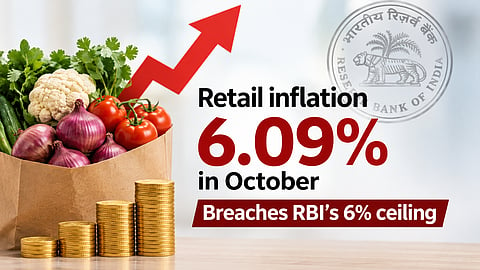

India's retail inflation rose to 6.09% in October from 5.54% in September, crossing the Reserve Bank of India's (RBI) upper tolerance limit of 6%. Rising food prices were the main contributor, adding to pressure on household budgets.
According to data released by the Ministry of Statistics and Programme Implementation on November 12, inflation has increased for nine consecutive months, more than doubling from 2.74% in January. Food inflation accelerated to 8.94% in October from 7.74% in September.
Vegetables accounted for much of the increase in food inflation. Onion prices jumped 116.22% year-on-year in October, compared with a 108.13% rise in September.
Garlic prices increased 60.74%, while lemons became 47.30% costlier. Ginger inflation remained elevated at 48.32%, although it moderated from 62.85% in September.
However, some vegetables became cheaper. Potato prices declined 14.24% year-on-year, while cauliflower prices fell 10.57%. Brinjal and cabbage also recorded price declines.
Inflation remained higher in rural India, rising to 6.63% in October from 6.08% in September. Urban inflation increased to 5.41% from 4.88%.
Rural food inflation reached 9.09%, while the corresponding urban rate stood at 8.68%.
Price pressures extended beyond groceries. Restaurant and accommodation services recorded inflation of 10.06%, while transport inflation stood at 5.84%. Clothing and footwear prices increased 4.96%.
Southern states recorded some of the highest inflation rates in the country. Among states with populations exceeding 50 lakh, Tamil Nadu topped the list at 7.29%, followed by Telangana at 7.26% and Andhra Pradesh at 7.25%.
The latest figures complicate the RBI's efforts to control prices without slowing economic growth. The central bank targets inflation of 4%, with a tolerance band of 2% to 6%. October's reading has moved beyond that range, raising the possibility of further monetary tightening.
The RBI increased its benchmark repo rate in October, and persistent food inflation could strengthen the case for another rate hike in December. However, weaker consumer demand and lower crude oil prices could provide some relief in the coming months.
