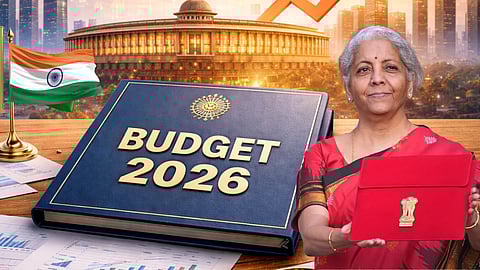

The Union Finance Minister outlined a set of measures in Budget 2026 aimed at strengthening consumption by easing tax burdens, lowering import costs and supporting household spending.
Customs duty exemption on select cancer medicines and drugs used for rare diseases
Import duty on dutiable personal imports reduced from 20 percent to 10 percent, cutting landed costs of gadgets, electronics, fashion and lifestyle products
Tax Collected at Source (TCS) on foreign tour packages reduced sharply to 2 percent from 20 percent
Import duty exemptions on parts used in microwave ovens, likely to bring down appliance prices
Simplified nil or lower TDS deduction certificates for small taxpayers to reduce upfront tax deductions
TCS on overseas education and medical expenses cut from 5 percent to 2 percent, easing the burden on families
Targeted steps to improve rural productivity and entrepreneurship to lift farm incomes and rural demand
Push for domestic manufacturing, skilling and job creation to support steady income growth
Interest received on compensation awarded by Motor Accident Claims Tribunals exempted from tax
Single Form 15G/15H filing through depositories to prevent excess TDS on interest and dividend income
The Budget places strong emphasis on education infrastructure and workforce readiness.
Five university townships proposed near major industrial and logistics corridors
Girls’ hostels to be set up in STEM higher education institutions in every district
Four new or upgraded telescope infrastructure facilities to strengthen research capacity
High-powered education-to-employment standing committee proposed, with focus on the services sector
The government reiterated its commitment to fiscal consolidation while simplifying compliance.
Fiscal deficit projected at 4.3 percent of GDP for FY27
Vertical devolution to states retained at 41 percent, in line with Finance Commission recommendations
Debt-to-GDP ratio for FY27 pegged at 55.6 percent
Six-month foreign asset disclosure window proposed for taxpayers
ITR-1 and ITR-2 filing deadline retained as July 31
Several sectoral initiatives were announced to strengthen long-term growth drivers.
Public capital expenditure proposed at ₹12.2 lakh crore for FY27
Mega textile parks to be developed through a challenge-based approach
India Semiconductor Mission 2.0 launched, alongside a higher outlay for electronics components manufacturing
Seven high-speed rail corridors proposed across key economic routes
₹20,000 crore earmarked for carbon capture and utilisation projects
Dedicated rare earth mineral corridors planned in Odisha, Kerala, Andhra Pradesh and Tamil Nadu
Expansion of customs duty exemptions to more cancer drugs and rare disease treatments
Creation of one lakh allied health professionals across ten disciplines
Training of 1.5 lakh caregivers over five years under NSQF-aligned programmes
Bio Pharma Shakti initiative launched with an outlay of ₹10,000 crore over five years
₹10,000 crore SME Growth Fund proposed to help create global-scale MSME champions
Additional support for self-reliant India funds and liquidity measures
High-level committee proposed to review and align the banking sector with India’s next growth phase
Budget 2026 signals a calibrated approach, combining consumption support with investment-led growth, while keeping India aligned with its long-term goal of becoming a developed economy.

