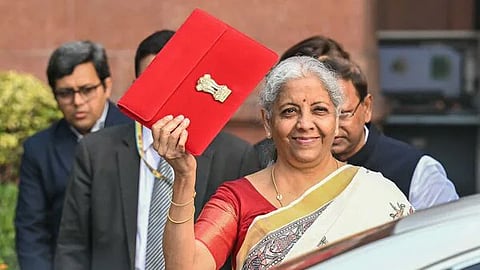

The Union Budget 2026 has placed tourism at the heart of its employment and growth agenda, highlighting its potential to generate jobs, earn foreign exchange and strengthen local economies across India.
Presenting the Budget, Finance Minister Nirmala Sitharaman said tourism could play a major role in employment generation and economic expansion at the grassroots level. A series of measures spanning institution-building, skilling, digital documentation and eco-tourism were announced to give the sector a fresh push.
To improve training and standards in hospitality, the government will upgrade the National Council for Hotel Management and Catering Technology into a National Institute of Hospitality. The new institute will work closely with academia, industry and government to strengthen skill development and professional training in the sector.
Skilling at the local level will be a key focus. The Budget proposes a pilot programme to upskill 10,000 tourist guides across 20 iconic destinations. The guides will undergo a standardised, high-quality 12-week training programme delivered in hybrid mode, in collaboration with the Indian Institute of Management.
To create a digital backbone for tourism, the government will establish a National Destination Digital Knowledge Grid. The platform will digitally document places of cultural, spiritual, heritage and tourism significance. This initiative is expected to create new employment opportunities for local researchers, historians, content creators and technology partners.
The Budget also gives special emphasis to eco-tourism and nature-based travel. Sustainable trekking and hiking trails will be developed in Himachal Pradesh, Uttarakhand and Jammu and Kashmir, along with Araku Valley in the Eastern Ghats and Pudigai Malai in the Western Ghats.
In wildlife tourism, special trails will be created, including turtle trails along nesting sites in Odisha, Karnataka and Kerala, and bird-watching trails around Pulicat Lake.

