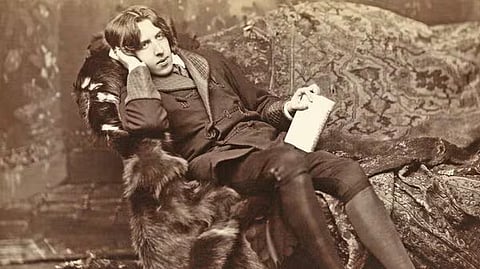

Oscar Wilde was an Irish poet, dramatist and novelist best known for The Picture of Dorian Gray and his celebrated comedies, especially Lady Windermere’s Fan and The Importance of Being Earnest.
He gained prominence at Oxford for his wit and association with the Aesthetic movement, later becoming a central figure in London’s artistic circles. Despite his brilliance, his public career was shattered by imprisonment in the 1890s.
“A cynic is a man who knows the price of everything and the value of nothing.”
— Oscar Wilde, Lady Windermere’s Fan, Act III
In the play, Cecil Graham asks, “What is a cynic?” and Lord Darlington delivers this line.
In business terms, Wilde cautions against confusing measurable cost with deeper value. Price is easy to quantify — salary, margin, fee, valuation, billable hours, CPM or CAC. Value is far more complex. It includes trust, judgment, taste, loyalty, reputation, creativity and moral seriousness.
A cynic, in Wilde’s framing, is not merely sceptical but limited — able to count, yet unable to discern.
The quote endures because leaders often mistake what is measurable for what is important. A company may know exactly what something costs and still misunderstand what makes it indispensable. The same applies to people: compensation, titles and output are indicators, not the full measure of contribution.
At its core, this is a critique of reductionism — the habit of reducing every decision to numbers and treating those numbers as the answer.
The idea feels especially relevant in today’s workplace, where organisations are under pressure to move faster without losing the “human edge”.
Deloitte’s 2026 Global Human Capital Trends report notes that seven in ten leaders see speed and agility as their primary competitive strategy over the next three years. At the same time, the World Economic Forum estimates that 39 percent of core skills will change by 2030.
This creates a tension: as systems become more data-driven, the risk of undervaluing human judgment increases.
Wilde’s insight becomes a leadership warning. The organisations that succeed will not be those that merely optimise what can be priced today, but those that recognise harder-to-measure strengths — adaptability, trust, collaboration and judgment — before they become visible on a spreadsheet.
“Price is what you pay; value is what you get,” — Benjamin Graham
This line, later quoted by Warren Buffett, complements Wilde’s insight. While Wilde offers a cultural critique, Graham provides an operating principle: price and value are often different.
Together, they highlight a core leadership lesson — look beyond immediate cost to long-term worth.
Separate cost from value in every major decision
Identify under-recognised strengths such as judgment and trust
Track long-term value indicators alongside short-term metrics
Avoid cost-cutting that erodes quality or capability
Reward meaningful contribution, not just visible output
Use language that reflects value, not just efficiency
Born on October 16, 1854, in Dublin, Wilde grew up in an intellectual Anglo-Irish family. He studied at Trinity College Dublin and later at Oxford.
He married Constance Lloyd in 1884, and they had two children. Wilde became one of London’s most prominent dramatists before his career declined in the 1890s.
“We are all in the gutter, but some of us are looking at the stars.”
“Always forgive your enemies; nothing annoys them so much.”
“Be yourself; everyone else is already taken.”
“The public is wonderfully tolerant. It forgives everything except genius.”
“To love oneself is the beginning of a lifelong romance.”
“Nowadays people know the price of everything and the value of nothing.” — Oscar Wilde
Wilde returned to this idea more than once because it captures a persistent flaw in modern thinking. The danger is not business itself, but shallowness — becoming efficient at measuring everything while failing to recognise what truly matters.
The strongest leaders are not those who price everything fastest, but those who can still recognise value where others fail to see it.
(By arrangement with livemint.com)

