
By Rajkumar Narayanan
Two shops may sell the same product, charge almost the same price and even operate in the same location. Yet one attracts a steady stream of loyal customers while the other struggles to survive.
Why does this happen?
Many business owners assume that success comes from offering the lowest price or the latest product. While these factors matter, they rarely create long-term success. Competitors can easily reduce prices, launch similar products or copy marketing strategies. What they cannot easily replicate are the unique strengths that make a business truly different.
This is exactly what the VRIO analysis helps businesses discover.
VRIO analysis is a strategic business framework used to evaluate an organisation's internal resources and capabilities. It helps companies identify whether their specific assets can provide a long-term, sustainable competitive advantage over rivals.
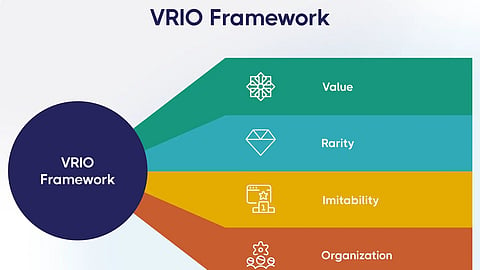
Developed by strategic management expert Jay Barney, the acronym stands for four key questions a business must ask about its resources: valuable, rare, inimitable and organisation.
Instead of constantly looking outside at competitors, it encourages business owners to first look inward and ask four simple but powerful questions.
A resource is valuable if it helps the business improve customer satisfaction, reduce costs, increase efficiency or generate higher profits. It could be advanced technology, skilled employees, a trusted brand or even an efficient business process.
For example, a retailer using a smart inventory management system can ensure popular products are always available while reducing excess stock. This improves the customer experience and prevents unnecessary losses.
If every competitor has the same resource, it no longer creates an advantage. A rare resource is something that only a few businesses possess.
This could be a highly experienced workforce, exclusive supplier relationships, proprietary technology or decades of customer trust. The rarer the resource, the stronger the competitive position.
Competitors can copy products, packaging, pricing and even store layouts. However, they often struggle to imitate intangible strengths such as organisational culture, brand reputation, customer loyalty, leadership quality or years of industry experience.
These are the assets that create long-term business success because they cannot be built overnight.
Many businesses invest heavily in technology, machinery or talented employees but fail to utilise them effectively. Without proper systems, trained people, leadership and processes, even the best resources remain underutilised.
In simple terms, owning a powerful asset is not enough. A business must also know how to make the best use of it.
Imagine a supermarket in Kochi that has invested in a modern billing system, automated inventory software and a dedicated team of experienced employees.
Initially, business is good. However, frequent stock-outs, delayed ordering and poor coordination between departments begin affecting customer satisfaction.
The owner decides to evaluate the business using the VRIO framework.
The inventory software is clearly valuable because it reduces stock shortages. The experienced staff are relatively rare, as many competing stores struggle with high employee turnover. Years of customer trust and personalised service are difficult for competitors to imitate.
However, one major issue becomes evident. Employees have never been properly trained to use the inventory system, and there is no structured process for reviewing stock levels.
After introducing regular staff training, assigning clear responsibilities and monitoring inventory through weekly reports, the supermarket experiences fewer stock-outs, faster replenishment, improved customer satisfaction and better profitability.
The technology was always available. The real difference came from using it effectively.
The biggest advantage of the VRIO model is that it shifts the focus from short-term competition to long-term business strength.
Instead of asking, "How can I beat my competitor this month?", business leaders begin asking, "What unique strengths does my business have that others cannot easily copy?"
This shift in thinking leads to smarter investment decisions, better resource allocation, stronger branding, improved operational efficiency and sustainable profitability.
The framework also helps businesses identify weaknesses before competitors exploit them. It encourages continuous improvement rather than reactive decision-making.
The beauty of the VRIO model is that it applies to businesses of every size and across every industry.
A manufacturing company can evaluate its production capabilities and technical expertise. A hospital can assess its specialist doctors, patient care systems and reputation. A restaurant can examine its recipes, customer experience and service quality. A logistics company can evaluate its delivery network and operational efficiency. Even startups can assess their innovation, technology and skilled workforce using the same framework.
Whether a business employs ten people or ten thousand, the questions remain equally relevant.
The real competitive advantage comes from the unique combination of people, processes, knowledge, culture and leadership that makes a business difficult to imitate.
The VRIO model provides a simple yet powerful way to identify these strengths and turn them into long-term success. Businesses that regularly evaluate their internal capabilities are better prepared to adapt, grow and remain competitive in an ever-changing market.
Ultimately, sustainable success is not about having more resources than everyone else. It is about recognising which resources truly matter and ensuring the organisation is fully equipped to transform them into lasting business value.
(The author is a Kochi-based management consultant)

