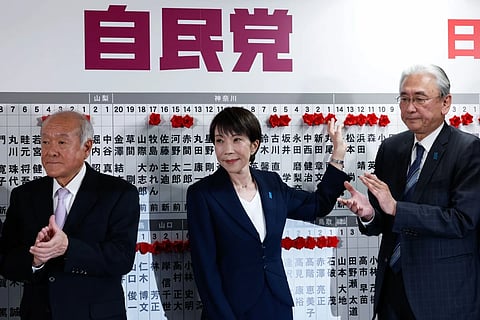

Japan’s stock markets surged to record highs on Monday after Prime Minister Sanae Takaichi’s ruling Liberal Democratic Party (LDP) secured a landslide victory in a snap parliamentary election, reviving global risk appetite and reinforcing the growing “Japan is back” investment narrative.
The Nikkei 225 jumped nearly 4 percent to an all-time high of 56,364, breaking out of a month-long consolidation phase. The rally reflected investor confidence that the decisive mandate would allow Takaichi to push ahead with aggressive fiscal policies aimed at sustaining growth and keeping inflation alive in the world’s third-largest economy.
The LDP won 316 seats in the 465-member lower house, giving Takaichi a two-thirds super majority and a clear path to pass legislation without meaningful opposition. Markets interpreted the result as a signal of policy continuity and political stability, at a time when global investors are reassessing portfolios after recent volatility across commodities, bonds and technology stocks.
The positive sentiment spilled across Asian markets. South Korea’s Kospi surged over 4 percent, Hong Kong’s Hang Seng Index rose nearly 2 percent, China’s CSI 300 gained 1.6 percent and Australia’s S&P/ASX 200 added close to 2 percent. The election outcome helped stabilise sentiment after weeks of global turbulence triggered by sharp unwinding of crowded trades.
Analysts say the election result strengthens the so-called “Takaichi trade”, characterised by rising equities, firmer bond yields and a weaker yen. The weaker currency is seen as supportive for exporters, while higher yields reflect expectations of sustained reflation and increased government borrowing.
The Nikkei has already gained about 12 percent so far this year, extending a strong multi-year rally supported by corporate governance reforms, shareholder-friendly policies and a long exit from deflation-era stagnation. Global investors have increasingly viewed Japan as a structural reform story rather than a tactical trade.
However, risks remain. Japan’s deteriorating relationship with China could pose challenges, particularly after Beijing warned its citizens against travel to Japan and imposed export restrictions following Takaichi’s comments on Taiwan. In addition, bond market volatility could limit the pace of the equity rally if fiscal concerns intensify.
Even so, investors remain optimistic that Japan’s political clarity, improving earnings outlook and pro-growth policies will continue to attract global capital, positioning the country as a key beneficiary of the ongoing rotation in global markets.

