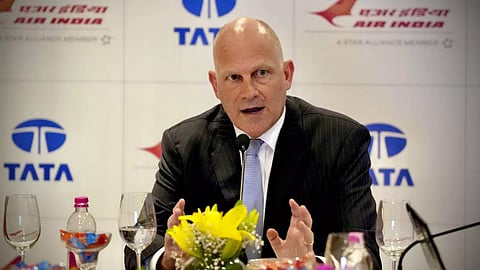

Campbell Wilson has stepped down as chief executive of Air India, as the Tata Group-owned carrier faces mounting financial losses and increased regulatory scrutiny following last year’s fatal crash, according to sources.
Wilson, who took charge in 2022 to lead the airline’s turnaround, will continue in his role during a six-month notice period until a successor is appointed.
The resignation comes at a time when India’s aviation sector is under stress from both external and internal challenges. Rising geopolitical tensions in the Middle East, operational disruptions, and regulatory concerns have added to pressure on airline managements.
The move also follows a leadership shake-up at rival IndiGo, which recently named industry veteran Willie Walsh as its next CEO.
Air India has come under sharp regulatory focus in recent months over safety and compliance lapses. Authorities flagged multiple violations, including operating aircraft without valid airworthiness certification and lapses in emergency equipment checks.
The scrutiny intensified after a crash last year that resulted in 260 deaths, putting the airline’s operational standards under the spotlight.
Since taking over, Wilson—formerly of Singapore Airlines—led key restructuring efforts at Air India. These included:
Overhauling engineering operations
Refurbishing aircraft fleet
Initiating service and process improvements
However, the turnaround has been weighed down by supply chain disruptions, aircraft delivery delays, and rising costs.
Air India has remained loss-making since its acquisition by Tata Group in 2022.
The airline, along with Air India Express, reported a combined loss of ₹98,080 crore in FY25
Pakistan’s airspace restrictions have disrupted key international routes
A prolonged Middle East conflict could further impact profitable western routes
The airline currently operates a fleet of 191 aircraft and has placed orders for over 500 planes as part of its long-term expansion strategy.
Air India’s board had already begun scouting for a successor earlier this year, signalling a possible leadership transition. The focus now shifts to stabilising operations, strengthening compliance, and navigating a challenging global environment.
With regulatory oversight tightening and financial pressures persisting, the incoming CEO will face a critical phase in the airline’s long-delayed turnaround journey.

