
Bulgaria is set to make a historic shift by adopting the euro on January 1. While the move signals economic progress and deeper European integration, concerns over corruption, political instability and unfinished reforms continue to worry citizens and investors.
Bulgaria will become the 21st member of the eurozone, replacing its national currency, the lev, with the euro. The move marks a major milestone for the southeastern European country, which joined the European Union in 2007. With Bulgaria’s entry, only six of the EU’s 27 countries will remain outside the euro area — Sweden, Poland, the Czech Republic, Hungary, Romania and Denmark.
The Bulgarian lev has been pegged to the euro since 1999, meaning the transition is expected to be technically smooth. Sofia formally began the process of joining the eurozone in 2018, and the lev entered the Exchange Rate Mechanism (ERM II) in July 2020. Earlier this year, the European Commission and euro area finance ministers cleared Bulgaria’s membership bid.
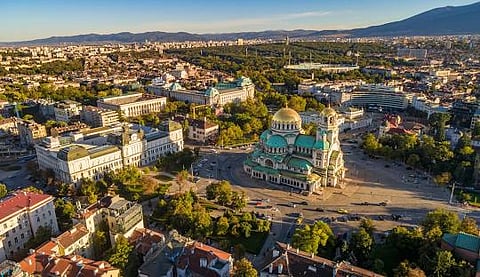
Bulgaria is a Balkan nation with diverse terrain encompassing Black Sea coastline, a mountainous interior and rivers, including the Danube. A cultural melting pot with Greek, Slavic, Ottoman, and Persian influences, it has a rich heritage of traditional dance, music, costumes, and crafts. At the foot of domed Vitosha mountain is its capital city, Sofia, dating to the 5th century BC.
Prime Minister Rosen Zhelyazkov has described the euro as “not just a currency but a strategic choice” that strengthens Bulgaria’s role in Europe. European Central Bank president Christine Lagarde has also backed the move, saying euro adoption will strengthen Bulgaria’s economic foundations, improve resilience to global shocks and give the country a stronger voice in eurozone decision-making.
Bulgaria’s macroeconomic indicators have improved significantly over the past decade. Inflation has eased to around 2.8 percent, down sharply from nearly 13 percent in 2022. The budget deficit stands near 3 percent of GDP, while public debt is around 24 percent — well below the EU’s 60 percent ceiling.
However, economists caution that euro adoption alone will not automatically raise living standards. Bulgaria’s income level remains only about 59 percent of the EU average. Experts say structural reforms are still needed to improve productivity, governance and long-term growth.
Beyond economics, political turmoil poses a serious challenge. Bulgaria ranks among the most corrupt countries in the EU, according to Transparency International. Public anger over graft and economic mismanagement has led to repeated protests.
Since 2021, the country has held seven parliamentary elections. Prime Minister Zhelyazkov resigned on December 11 following mass protests against corruption and proposed budget measures, including higher taxes and social security contributions.
For Bulgaria, joining the eurozone is a landmark achievement. But whether it translates into lasting prosperity will depend less on the currency change and more on political stability, clean governance and long-delayed reforms.
