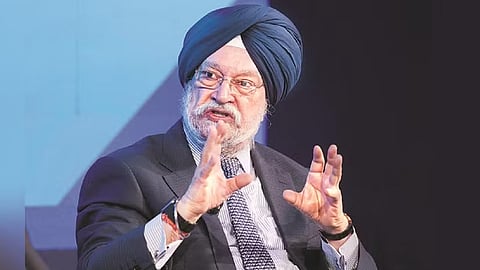

The Centre has slashed excise duty on petrol and diesel by ₹10 per litre, choosing to absorb the fiscal hit rather than pass on soaring crude costs to households. The intervention comes as crude prices spike sharply amid tensions in West Asia and supply risks around the Strait of Hormuz.
Petroleum Minister Hardeep Singh Puri said the government consciously opted to take the burden on its finances to protect consumers, even as global fuel prices surge.
The excise reduction brings the central levy on petrol down to about ₹3 per litre, while diesel excise has effectively been cut to zero. According to the minister, the government is offsetting losses of around ₹24 per litre on petrol and ₹30 per litre on diesel faced by oil marketing companies (OMCs).
Finance Minister Nirmala Sitharaman said the move is aimed at insulating consumers from global volatility, while also ensuring adequate domestic fuel supplies by imposing export duties on refined products.
Fuel taxes remain a key revenue source for both the Centre and states, limiting room for prolonged cuts. Yet, high fuel prices have a direct bearing on inflation, logistics costs and household budgets.
The policy shift follows a steep rally in global crude prices—from about $70 per barrel to nearly $122 in a month—triggered by escalating geopolitical tensions involving the US, Israel and Iran.
Puri noted that fuel prices have risen sharply worldwide:
30–50 percent in Southeast Asia
Around 30 percent in North America
About 20 percent in Europe
Nearly 50 percent in parts of Africa
Against this backdrop, India faced a choice: pass on the increase or absorb the shock. The government has opted for the latter.
India imports nearly 85 percent of its crude oil needs, with around 12–15 percent routed through the Hormuz corridor. Any disruption there can sharply raise import costs, weaken the rupee and push up inflation.
By cutting excise duty, the Centre is attempting to contain inflationary pressures and support consumption at a time of heightened global uncertainty.
A sharp fall at the pump is unlikely in the immediate term.
Retail prices in India are not revised daily in line with crude movements. OMCs typically absorb short-term volatility. The excise cut is therefore expected to first compensate these companies for under-recoveries before translating into visible relief for consumers.
Fuel pricing in India involves multiple layers:
Crude oil cost (influenced by global prices and rupee-dollar rate)
Refining, freight and insurance costs
OMC marketing margins
Central excise duty
State VAT
Dealer commissions
Crude typically accounts for 35–45 percent of the final price, while taxes—central and state combined—make up 40–55 percent.
To ensure availability within the country, the government has also imposed export duties:
₹21.5 per litre on diesel
₹29.5 per litre on aviation turbine fuel (ATF)
This effectively discourages refiners from exporting fuel at a time of elevated global prices.
Amid rising geopolitical tensions, Puri also dismissed speculation about a nationwide lockdown, stating that no such proposal is under consideration.
The latest excise cut underscores a delicate balancing act—sacrificing revenue to stabilise prices and growth. The sustainability of this approach will depend largely on how crude prices evolve and whether tensions in West Asia ease in the weeks ahead.

