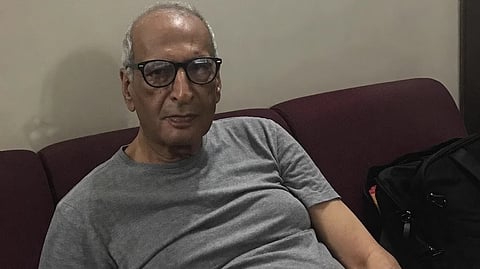

Jimmy Naval Tata, younger brother of the late Ratan Tata, has broken his silence on the ongoing leadership and governance disputes within the Tata Group.
He has backed N Chandrasekaran's reappointment as Tata Sons chairman for a third term and supported the stock market listing of the group's holding company, taking a position contrary to that of his half-brother Noel Tata.
Jimmy, who has largely stayed away from public discussions and boardroom disputes, has also raised concerns over the growing influence of family members within Tata Trusts and changes to its governance structure.
Jimmy reportedly conveyed his views in a documented discussion with a fellow trustee, who subsequently briefed other trustees.
Jimmy has questioned the appointment of multiple members of the Tata family to the boards of charitable trusts, arguing that these institutions were established to serve the public rather than advance family interests.
He believes that allowing more than one family member to serve on a trust could effectively transfer control over its substantial shareholding in Tata Sons without any financial consideration. He described such arrangements as a potential "back-door takeover" of Tata Sons.
Tata Trusts collectively owns around 66% of Tata Sons, making it the largest shareholder in the holding company. The Sir Ratan Tata Trust (SRTT) alone holds 23.56%.
Jimmy has served as a trustee of SRTT since 1989 and is among its three perpetual trustees, alongside Noel Tata and Jehangir Jehangir.
Jimmy has also questioned amendments made to Tata Sons' Articles of Association around 2013-14. According to him, the earlier governance framework maintained a separation between charitable trusts and the commercial management of Tata Sons.
He alleged that subsequent amendments gave the Tata Trusts chairman extensive veto powers and greater influence over appointments to the Tata Sons board.
Jimmy also criticised the introduction of four-year tenure limits for certain trustees while exempting others. He argued that such arrangements could weaken trustee independence and marginalise dissenting voices.
He referred to disagreements involving trustees Venu Srinivasan and Vijay Singh while questioning the handling of internal governance matters.
On the question of leadership, Jimmy has firmly supported Chandrasekaran's continuation as Tata Sons chairman. He credited Chandrasekaran with improving the financial performance of several Tata companies, addressing debt-related challenges and delivering strong earnings and dividend payouts.
Jimmy questioned Noel Tata's opposition to Chandrasekaran's reappointment despite support from other directors. The Tata Sons board approved Chandrasekaran's reappointment for another five-year term on September 17, 2026, by a 4-1 majority, with Noel voting against the proposal. Chandrasekaran's current tenure is due to end in February 2027.
Jimmy has also supported the Reserve Bank of India's requirement that Tata Sons list its shares on a recognised stock exchange.
The RBI classified Tata Sons as an upper-layer non-banking financial company (NBFC) in September 2022. Under the regulatory framework, companies in this category are required to list within three years of classification.
Tata Sons subsequently sought to surrender its core investment company registration, but the RBI rejected the application in September 2026.
Jimmy believes a public listing would strengthen transparency, improve accountability and require changes to the company's existing governance framework. He has also warned against restructuring Tata Sons merely to avoid regulatory listing requirements.
Noel Tata, however, has argued that a public listing could change the group's traditional approach by placing greater emphasis on shareholder returns rather than its philanthropic objectives.
Jimmy's intervention adds another dimension to the disagreements within one of India's largest business groups. Despite his low public profile, he remains an influential trustee and directly owns around 0.81% of Tata Sons.
Whether his views will influence future decisions remains uncertain, particularly as he has rarely participated in voting on contentious trust matters.
The dispute now centres on three important questions: who controls Tata Trusts, who leads Tata Sons and whether the holding company should remain privately owned.
The outcome could have implications for the governance and ownership structure of the wider Tata Group.
