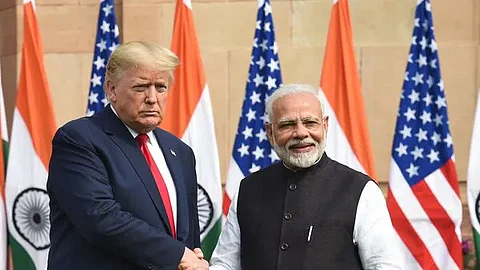

The United States and India have released an interim trade framework, signalling progress towards a long-pending bilateral trade agreement. The framework focuses on lowering tariffs, reshaping energy ties and deepening economic cooperation, as both countries look to secure supply chains and reduce global risks. A formal trade deal is expected to be signed by March.
Both governments said more negotiations are needed, but described the framework as a key step towards a broader trade pact.
The opposition Congress party criticised the framework, calling it one-sided and claiming it could hurt farmers and small traders.
Under the interim arrangement:
• The US will cut tariffs on Indian goods to 18 percent, from earlier levels that went up to 50 percent
• India has agreed to reduce purchases of Russian oil and increase energy imports from the US and Venezuela
Donald Trump said part of the earlier tariff hike was imposed as a penalty for India’s Russian oil purchases. That portion has now been withdrawn after India agreed to change its oil sourcing.
The joint statement also shows that India resisted US pressure to fully open its agriculture sector, which remains politically sensitive.
Commerce and Industry Minister Piyush Goyal said the agreement protects farmers’ interests and rural livelihoods by keeping sensitive farm and dairy products outside the deal. Goyal stressed that sensitive agricultural and dairy items, including staples like wheat, rice and maize, as well as milk, poultry and meat, have been “completely protected” under the agreement
The protected list includes:
• Rice, wheat and maize
• Soya and poultry
• Milk products and ethanol
• Tobacco, some vegetables and meat products
The joint statement confirmed that India will buy $500 billion worth of US goods over the next five years.
The purchases will include:
• Oil and natural gas
• Coking coal
• Aircraft and aircraft parts
• Precious metals
• Technology products, including AI-related chips and data-centre equipment
This is among the largest long-term procurement commitments India has made under a trade arrangement.
India has agreed to eliminate or reduce tariffs on:
• US industrial goods
• A wide range of US agricultural products
These include animal feed, tree nuts, fresh and processed fruits, soybean oil, wine and spirits.
India will also address long-standing non-tariff barriers affecting agricultural imports, medical devices and communication equipment. Talks on accepting US or international safety and licensing standards are expected to conclude within six months.
Despite the agreement:
• The US will keep an 18 percent tariff on most Indian exports
• This covers textiles, apparel, leather goods, footwear, plastics, chemicals, handicrafts and certain machinery
India will receive tariff relief similar to other US allies on selected aircraft and aircraft parts, along with a lower-tariff quota for auto parts.
Relief for Indian generic medicines and pharmaceutical ingredients will depend on the outcome of an ongoing US tariff investigation.
Piyush Goyal said the framework opens access to a $30 trillion US economy for Indian exporters, especially farmers, fishermen and micro, small and medium enterprises.
The two countries also agreed to cooperate on export controls for sensitive technologies and to address trade practices of third countries, a reference to China.
After years of slow progress, strategic concerns such as competition with China, supply-chain diversification and energy security have added urgency to US–India trade talks.
The opposition Congress party criticised the framework, calling it one-sided and claiming it could hurt farmers and small traders.

