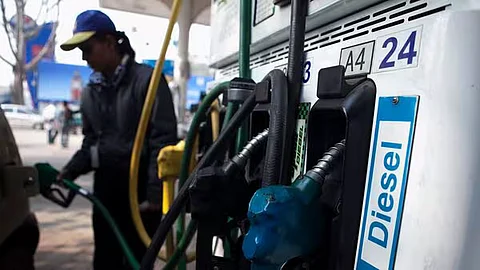

Industrial, commercial and institutional consumers will no longer be allowed to purchase petrol and diesel from regular fuel stations, as the Centre moves to protect supplies meant for ordinary motorists amid rising pressure on the country's fuel distribution system.
The temporary restrictions, which can remain in force for up to 90 days and be extended if necessary, come at a time when global oil markets are facing disruption from geopolitical tensions and supply chain uncertainties. The move is aimed at preventing fuel shortages, hoarding and diversion of supplies.
The Ministry of Petroleum and Natural Gas has issued the Motor Spirit and High Speed Diesel (Temporary Regulation of Supply through Retail Outlets) Order, 2026, directing oil marketing companies and fuel retailers to curb bulk purchases from retail outlets.
According to the government, some industrial and institutional users had shifted their fuel purchases from bulk supply channels to petrol pumps because of a significant price gap between retail and bulk diesel.
In Delhi, diesel sold through retail pumps costs about ₹95.20 per litre, while bulk buyers are currently paying around ₹134.50 per litre.
This price difference emerged after state-owned oil companies kept retail fuel prices relatively stable to shield consumers from the sharp rise in global crude oil costs following the West Asia crisis earlier this year.
Under the order:
Industrial, commercial and institutional consumers may be prohibited from buying petrol and diesel from retail fuel stations.
Such consumers will have to source fuel through authorised bulk supply channels or their own consumer pumps.
Diesel sales at petrol pumps will be restricted to vehicle fuel tanks and Petroleum and Explosives Safety Organisation (PESO)-approved containers.
Purchases will be capped at 200 litres per customer or vehicle per day.
Fuel purchased under these provisions cannot be resold.
The government said large-scale procurement through petrol pumps could divert supplies intended for regular consumers and create localised shortages.
Authorities fear that if industries and commercial establishments continue to buy fuel at subsidised retail rates, fuel availability for motorists, transport operators and essential services could come under pressure.
The order empowers state-run oil marketing companies and other authorised retailers to enforce the restrictions immediately.
The notification cited the "current prevailing geopolitical situation" affecting parts of the world, which has disrupted international petroleum supply chains, shipping logistics and product availability.
The government believes temporary controls are necessary to ensure equitable distribution of fuel across the country during a period of heightened uncertainty in global energy markets.
State governments and Union Territory administrations have been directed to take action against:
Hoarding of fuel
Black marketing
Unauthorised procurement
Diversion of supplies
Other malpractices in fuel distribution
Violations of the order will be punishable under the provisions of the Essential Commodities Act.
India follows a dual-pricing system for diesel. Retail pump prices are often moderated by PSU oil companies to protect households and transport users from sharp fluctuations in global crude oil prices.
Bulk consumers—including industries, telecom tower operators, large commercial establishments and companies running diesel generators—typically pay market-linked rates that reflect international oil costs more closely.
When the gap between retail and bulk prices widens significantly, bulk consumers have an incentive to purchase fuel from petrol pumps instead of authorised bulk channels, putting additional pressure on retail fuel supplies. The government's latest order seeks to prevent such distortions and ensure uninterrupted availability of petrol and diesel for the general public.

