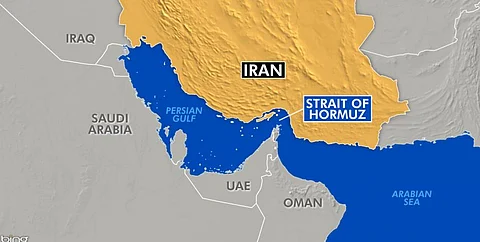

Fresh military exchanges between the US and Iran in the Strait of Hormuz have heightened fears of a wider conflict in West Asia, threatening global oil supplies and adding fresh uncertainty to financial markets already shaken by months of geopolitical tensions.
The US military said it carried out strikes on Iranian military targets on Thursday after what it described as “unprovoked Iranian attacks” on American naval vessels in the strategic waterway. The confrontation came despite a fragile ceasefire that has been in place for nearly a month and ongoing diplomatic efforts aimed at reopening the Strait of Hormuz for commercial shipping.
Iran rejected the US version of events and accused Washington of first violating the ceasefire by attacking an Iranian oil tanker near Hormuz. Iranian military officials said Tehran retaliated only after US forces targeted Iranian vessels and civilian-linked infrastructure.
US President Donald Trump insisted that the ceasefire remained intact despite the exchange of fire. In comments to American media and on social media, Trump said US destroyers had come under attack but escaped without damage. He claimed Iranian missiles and drones were “easily knocked down” and warned Tehran that stronger military action could follow if it failed to quickly agree to a US-backed deal.
The renewed conflict has sharply increased concerns over global energy security. The latest escalation comes at a time when both sides were reportedly discussing a temporary arrangement to reduce tensions. Iranian officials were said to be considering a proposal under which the US would ease its blockade on Iranian ports while Tehran would guarantee safe commercial passage through Hormuz and pause hostilities for 30 days to allow broader peace negotiations.
Global markets reacted nervously to the developments. Crude oil prices climbed again above $100 a barrel, gold prices remained volatile and shipping companies continued to monitor the situation closely. Analysts warned that a prolonged disruption in Hormuz could worsen inflation pressures worldwide, disrupt supply chains and create fresh volatility in equity and currency markets.

