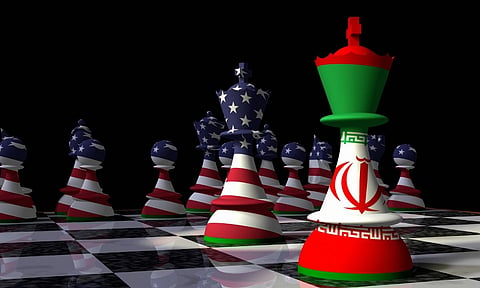

The US has threatened severe sanctions against any country or entity that continues to maintain economic ties with Iran, stepping up its campaign to isolate Tehran after military action failed to force the Iranian regime to meet Washington’s demands.
The move could trigger a fresh confrontation with China, Iran’s biggest trading partner and a major buyer of its oil. Beijing has already signalled that it will resist US pressure to sever its economic links with Tehran.
Iran, meanwhile, has warned that countries joining the US-led isolation campaign could face retaliation.
US Treasury Secretary Scott Bessent announced the new campaign, dubbed “Operation Economic Outcast”, describing it as an unprecedented effort to cut Iran off from the global financial system.
“We are launching an economic onslaught against Iran’s financial connections around the globe,” Bessent said. The objective, he added, was to sever the economic lifelines supporting the Iranian regime.
Bessent warned that any entity facilitating transactions involving Iranian oil or helping convert the proceeds into funds for the regime would be targeted.
The US has identified entities that continue to conduct business with Iran and will give them deadlines to end those dealings or face sanctions. The deadlines will vary depending on individual circumstances.
“Any entity that facilitates money laundering on behalf of Iran will be removed from the US dollar system,” Bessent said, signalling that access to the dollar-based financial system could become a major weapon in Washington’s campaign.
US President Donald Trump is also contacting world leaders, seeking an end to their economic interactions with Tehran.
The biggest question is whether Washington will be prepared to impose sanctions on China, which is estimated to have accounted for around 80 percent of Iran’s shipped oil purchases last year.
Asked whether Beijing could be targeted, Bessent said no country or entity would be exempt if it facilitated transactions connected to Iranian oil.
China, however, has rejected the use of sanctions and economic pressure as a solution to the Iran crisis. Its embassy in Washington said Beijing supported resolving the issue through political and diplomatic means and called on all parties to act responsibly.
China’s response could put Washington in a difficult position. Imposing sweeping sanctions on Chinese companies and financial institutions could significantly escalate tensions between the world’s two largest economies.
Tehran has vowed to retaliate against countries that cooperate with the US-led sanctions campaign. Maj Gen Ali Abdollahi, chief of staff of Iran’s armed forces, said retaliation could take various forms, including land, sea and air operations as well as cyber-attacks.
The latest US measures come nearly six months after the US and Israel launched military action against Iran, killing its Supreme Leader Ali Khamenei.
Iran subsequently declared the Strait of Hormuz closed and attacked ships that attempted to ignore the warning. The US responded with a counter-blockade targeting Iranian oil exports through the strategic waterway.
The resulting standoff has disrupted global trade and energy markets, with the Strait of Hormuz remaining a major source of uncertainty for crude oil supplies.
Washington appears to be attempting to achieve through intensified economic pressure what military force had so far failed to accomplish. The US, however, has not ruled out further military action. Defence Secretary Pete Hegseth said on Monday that Washington was not closing the door on military strikes in or around the Strait of Hormuz or Iran.
Some countries have already begun responding to the US pressure.
The United Arab Emirates, a close US and Israeli ally, announced that it was suspending trade ties with Iran. Turkey, another important trading partner of Tehran, has criticised the US-led campaign but has yet to respond to Washington’s latest sanctions threat.
Analysts say the new sanctions could increase economic pressure on Iran but are unlikely to deliver a quick political settlement.

