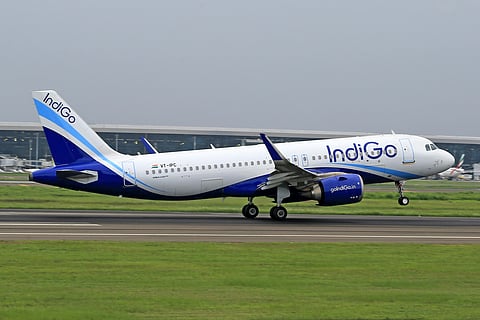

IndiGo, India’s busiest airline, continued to reel under severe operational strain on Thursday, with a new round of mass flight cancellations adding to the chaos that has disrupted travel plans for thousands of passengers over the past couple of days.
The latest disruptions underscore the scale of IndiGo’s crew-availability crisis and the knock-on effects of newly tightened flight-duty rules that have squeezed the schedules of airlines across the country.
Bengaluru airport said 73 IndiGo flights had been cancelled on December 4. At Hyderabad’s Rajiv Gandhi International Airport at least 68 flights to and from the city were likely to be grounded. This comes barely 24 hours after the airline scrapped around 150 flights and delayed dozens more across major metros, leaving terminals overcrowded and passengers stranded for hours.
The turmoil stems from a combination of factors that have converged in recent weeks. IndiGo has been grappling with an acute shortage of cockpit crew after the implementation of the second phase of the Flight Duty Time Limitations (FDTL) norms on November 1 — rules mandated by the Delhi High Court and enforced by the DGCA. The revised norms impose stricter weekly rest requirements, reduce the number of permissible night landings between midnight and 6 am, and tighten overall fatigue-management protocols. For an airline that operates one of the densest domestic night schedules, the changes have proven particularly disruptive.
The situation has been worsened by winter-season schedule rejigs, adverse weather, increased airspace congestion and what the airline described as “minor technology glitches”, creating a compounding effect that IndiGo insists could not have been foreseen. An airline spokesperson said a “multitude of unforeseen operational challenges” had hit operations over the past 48 hours, adding that calibrated schedule adjustments were now underway to stabilise the network.
The DGCA on Wednesday launched a probe into the large-scale disruptions and has asked IndiGo to explain the reasons behind the cascading cancellations as well as outline its recovery plan. Regulators are also examining whether the airline had adequate buffers in place before the new fatigue rules took effect.
The operational mess has spilled over into the markets. Shares of InterGlobe Aviation, IndiGo’s parent, fell 3.4 percent in early Thursday trade, hitting an intraday low of Rs 5,405 on the NSE.
On Wednesday alone, Delhi saw 38 cancellations, Bengaluru 42, Mumbai 33 and Hyderabad 19. Network-wide delays continued well into the evening, as crews and aircraft were repositioned.
IndiGo, meanwhile, announced that it has renewed a five-year contract with AvioBook, a Thales company, to continue deploying its Electronic Flight Bag solution — part of its broader digital and cockpit modernisation framework.
With congestion high, crew stretched, and winter disruptions only beginning, industry executives warn that India’s aviation sector may be in for a turbulent month unless airlines can quickly rebuild buffers and stabilise rosters.

