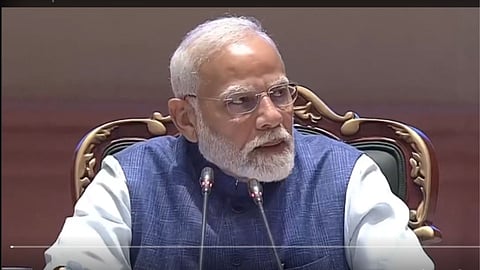

Prime Minister Narendra Modi’s Monday appeal asking Indians to avoid buying gold for a year has sparked intense debate because gold in India is far more than a financial asset. It is deeply linked to:
weddings and family traditions,
festivals and religious customs,
household savings,
emergency security,
and social status.
For decades, Indian households have viewed gold as the safest form of wealth preservation. That is why Modi’s comments were widely seen as unusual and even alarming.
Economists say the Prime Minister’s message is primarily about protecting India’s economy during a period of rising global uncertainty.
India is currently facing pressure from:
soaring crude oil prices,
geopolitical tensions in West Asia,
a weakening rupee,
rising import costs,
and concerns over foreign exchange reserves.
India imports most of the gold consumed domestically, and every gold purchase leads to dollar outflows because imports are paid for in US dollars.
India’s FY26 import bill reportedly stood at around $775 billion, with four commodities accounting for over $240 billion:
Crude oil: $134.7 billion
Gold: $72 billion
Vegetable oils: $19.5 billion
Fertilisers: $14.5 billion
Gold alone accounts for nearly 10 percent of India’s total imports.
India already imports nearly 85 percent of its crude oil needs. When oil prices surge globally, the country needs more dollars to pay for energy imports.
If gold imports also remain high at the same time:
dollar demand rises sharply,
the rupee weakens,
import costs increase further,
and foreign exchange reserves come under pressure.
This creates a dangerous economic cycle:
higher imports weaken the rupee,
a weaker rupee makes imports more expensive,
and rising import bills widen the current account deficit.
Governments usually tolerate essential imports because they support economic activity:
A large share of imported gold:
goes into jewellery,
remains locked in household lockers,
or sits idle as savings.
Economists therefore classify excessive physical gold imports as “non-productive imports”, especially during periods of global economic stress.
Markets interpreted Modi’s appeal as a signal that the government expects prolonged global economic turbulence.
The comments came alongside appeals to:
reduce fuel consumption,
postpone foreign travel,
and revive work-from-home practices.
This combination heightened concerns about:
expensive oil imports,
supply-chain disruptions,
inflation risks,
and pressure on India’s balance of payments.
Jewellery stocks including companies such as Titan Company and Kalyan Jewellers fell sharply after the remarks as investors feared weaker gold demand.
Experts believe Modi’s appeal may not reduce Indians’ interest in gold itself. Instead, it could accelerate the shift from physical gold to financial alternatives such as:
Gold ETFs,
digital gold,
and Electronic Gold Receipts (EGRs).
These products:
avoid large-scale fresh imports,
offer better liquidity,
reduce storage concerns,
and keep more capital within the financial system.
Modi’s call reflects growing concern within policymakers about the combined risks posed by high oil prices, currency volatility and rising import pressures on India’s economy.

