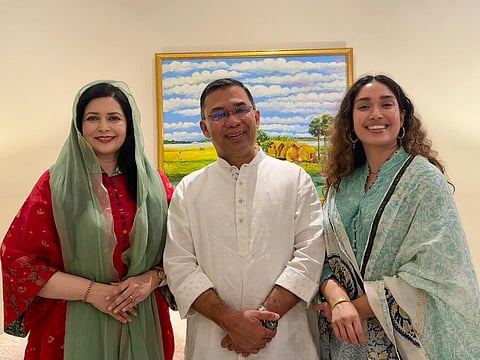

Tarique Rahman, chairman of the Bangladesh Nationalist Party (BNP), is poised to become Bangladesh’s next prime minister after his party secured a clear majority in the general election.
Rahman, 60, represents the powerful Zia political dynasty that has shaped Bangladesh’s politics for decades. Both his parents served as national leaders. His mother, Khaleda Zia, was the country’s first female prime minister, while his father, Ziaur Rahman, was a military ruler-turned-president and founder of the BNP.
Rahman became active in the BNP in 2001 during his mother’s second term as prime minister. His formal rise within the party began in 2002 when he was elevated to a senior position.
His rapid ascent triggered allegations of nepotism from political rivals. Over time, he earned a reputation as an enforcer within the party, tasked with maintaining discipline and consolidating influence.
Rahman’s political journey has been marked by controversy. He has faced repeated allegations of corruption, which he has consistently denied. Supporters argue he was targeted for political reasons.
In 2007, during a military-backed caretaker government, he was arrested on corruption charges. Rahman claimed he was tortured while in custody. After spending 18 months in prison, he was released and moved to London. He remained abroad for 17 years.
While in exile, he continued to influence BNP strategy and became acting chairman in 2018 after Khaleda Zia was imprisoned. During the tenure of former prime minister Sheikh Hasina, Rahman faced multiple cases and was sentenced in absentia in several, including one linked to a 2004 grenade attack. He was later cleared of all charges.
Rahman returned to Bangladesh on December 25, 2025. Five days later, Khaleda Zia passed away. On January 9, he formally assumed leadership of the BNP.
Analysts say his rise within the party was widely expected, given the BNP’s long association with the Zia family. Critics have again raised questions about dynastic politics, while party leaders argue the BNP had limited scope to develop alternative leadership under the previous regime.
The key question now is whether Rahman can transition from party figurehead to national leader. Observers say his experience — including years in exile and legal battles — will shape how he governs as Bangladesh enters a new political phase.

