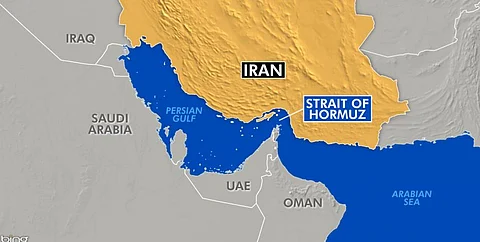

Iran has partially reopened the strategically crucial Strait of Hormuz, allowing cargo movement for a handful of “friendly” nations including India, even as restrictions remain in place for others, signalling a sharp escalation in geopolitical tensions in West Asia.
Iranian Foreign Minister Abbas Araghchi said the strait is “not completely closed”, clarifying that vessels from India, China, Russia, Iraq and Pakistan are being permitted to pass through the narrow shipping corridor.
From Tehran’s standpoint, access to the strait is now explicitly political. “It is closed only to enemies,” Araghchi said, underlining that ships linked to adversarial nations and their allies would not be allowed transit.
The Strait of Hormuz handles nearly one-fifth of global oil and gas trade, making any disruption a major concern for energy-importing nations, especially in Asia.
The partial closure has already rattled global markets. Brent crude has climbed towards $104 a barrel, while US benchmark WTI hovered near $92, reflecting fears of prolonged supply disruptions.
Traders warn that the current situation could trigger the sharpest monthly rise in oil prices since the early 1990s, as millions of barrels of daily supply remain affected. Prices of refined fuels such as diesel and aviation turbine fuel have also surged.
Asian economies, heavily reliant on Gulf energy supplies, are among the worst hit. India, despite being granted passage, remains vulnerable to price spikes that could widen its trade deficit and fuel inflation.
The move comes amid ongoing military tensions involving Iran and the US and its allies. While Washington has indicated that diplomatic efforts are continuing, Tehran has rejected ceasefire proposals and instead pushed for conditions including sovereign control over the strait.
Adding to concerns, Iran’s parliament is reportedly considering a proposal to impose transit fees on ships using the waterway — effectively turning the corridor into a controlled passage with economic implications for global trade.
International bodies have raised concerns over the widening impact of the disruption. The UN's António Guterres has called for the immediate reopening of the strait, warning that prolonged restrictions could severely affect the movement of oil, gas and fertilisers during a critical period for global agriculture.
With supply chains already under pressure, the fallout is beginning to reflect in rising costs of fuel, food and essential commodities worldwide, underscoring the far-reaching consequences of the Hormuz crisis.
(By arrangement with livemint.com)

