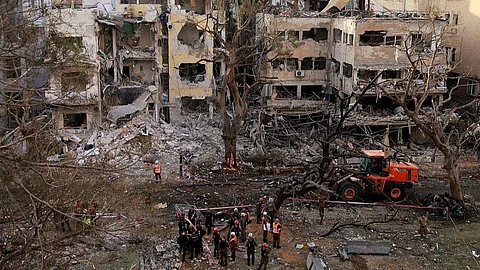

Iran has made it clear that it will not engage in negotiations with the US unless Israeli military operations in Lebanon come to a halt.
Reports by Fars News Agency reiterated that Tehran has “no plans” to attend talks with United States in Islamabad until a broader ceasefire is established, including an end to Israeli strikes on Hezbollah targets.
This position highlights a key sticking point in the diplomatic process. While Iran insists that any ceasefire must cover Lebanon, both the US and Israel have indicated that their agreement with Tehran does not extend to that theatre.
Iran has also denied reports that senior officials have travelled to Islamabad for talks. State-linked media, citing Tasnim News Agency, said Foreign Minister Abbas Araghchi and Parliament Speaker Mohammad Bagher Ghalibaf remain in Tehran and are continuing their official duties.
The reports dismissed claims that an Iranian negotiating team had already arrived in Pakistan as “completely false”.
Despite Iran’s denial, Pakistan continues to prepare for possible high-level talks. Deputy Prime Minister Ishaq Dar said visa requirements for delegates and journalists have been waived, signalling Islamabad’s intent to facilitate negotiations.
Security has been stepped up across the capital, with thousands of personnel deployed amid expectations of a high-stakes diplomatic engagement.
US Vice-President JD Vance is expected to lead the American delegation, reflecting mounting pressure in Washington to secure a ceasefire.
The temporary ceasefire announced earlier this week is already under stress due to conflicting interpretations.
Iran maintains that the truce must include a halt to Israeli operations in Lebanon. However, US President Donald Trump and Israeli Prime Minister Benjamin Netanyahu have indicated that Israeli military actions in Lebanon will continue.
This divergence has deepened mistrust and cast doubt on whether formal negotiations can begin in the near term.
The reopening of the Strait of Hormuz remains central to any diplomatic breakthrough. Iran’s move to shut the key oil transit route has disrupted global energy supplies, pushing crude prices higher and unsettling markets. The US has been pressing Tehran to restore shipping through the Strait, which carries a significant share of the world’s oil flows.
Iran’s stance on Lebanon and its denial of participation underline the fragile state of diplomacy. With core disagreements unresolved and military actions continuing, the proposed Islamabad talks face significant hurdles.
For now, the ceasefire remains tenuous, and the risk of renewed escalation—and continued volatility in global oil markets—remains high.

