
Tensions in the Gulf have sharpened after Donald Trump said the United States would step in to help stranded commercial vessels pass through the Strait of Hormuz — a move Iran has warned could trigger direct military confrontation.
Trump announced on Sunday that US forces would begin assisting ships stuck in the narrow waterway from Monday, describing the plan as a “humanitarian gesture” aimed at easing a growing crisis at sea.
Iran has responded with a sharp warning. Its military has said it would target any foreign armed forces entering the strait, while senior political figures have described potential US involvement as a breach of the existing ceasefire understanding.
Adding to the tension, the Islamic Revolutionary Guard Corps (IRGC) has released maps claiming control over key stretches of the strait.
Despite the geopolitical escalation, oil markets have shown little reaction so far — reflecting deep scepticism about whether the situation on the ground will change meaningfully.
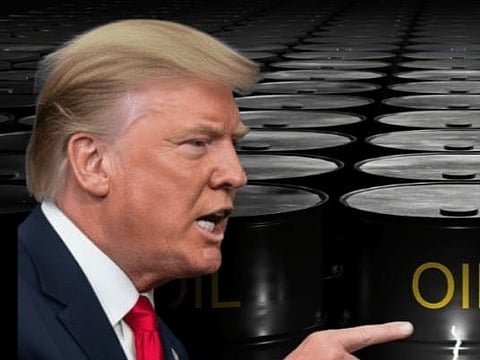
Prices of Brent crude continue to hover above $100 per barrel, still more than 50 percent higher than pre-war levels. Traders appear unconvinced that the US plan will immediately restore safe passage through the strait.
Market participants note that similar proposals to deploy US naval protection surfaced earlier in the conflict but failed to materialise, largely due to operational challenges and the risk of direct confrontation with Iranian forces.
The Strait of Hormuz remains one of the world’s most critical energy chokepoints, handling a significant share of global oil shipments. For now, it effectively remains under Iranian control, with most commercial vessels reluctant to risk transit.
According to a United Nations maritime agency, nearly 2,000 ships carrying around 20,000 seafarers have been stranded in the strait since the US-Iran conflict escalated in February.
Unless there is a clear and credible shift in security conditions, analysts believe oil prices will remain elevated and volatile, with any meaningful correction dependent on actual — not announced — changes in shipping flows through the strait.

