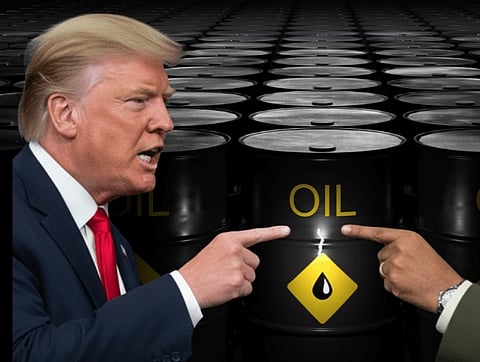

The United States has significantly diluted a proposed sanctions bill targeting countries that continue to buy Russian energy, reducing the maximum tariff from 500 percent to 100 percent. The revised legislation, introduced by a bipartisan group of US senators, is expected to have major implications for India, one of Russia's largest crude oil buyers.
The new bill limits the tariff to the five largest importers of Russian oil and natural gas instead of imposing a blanket levy on all buyers. India and China remain among the countries that could be affected if the legislation is enacted.
The original proposal, introduced in 2025 by late Republican Senator Lindsey Graham and Democratic Senator Richard Blumenthal, sought to impose tariffs of up to 500 percent on imports from countries purchasing Russian oil, natural gas, uranium and other petroleum products.
Following discussions with the White House, lawmakers revised the proposal by:
reducing the maximum tariff to 100 percent;
limiting its scope to the five biggest buyers of Russian energy; and
allowing the US President to temporarily waive sanctions if deemed to be in America's national interest.
The bill also exempts countries importing less than 15 percent of Russia's natural gas exports if they are actively reducing their dependence on Russian supplies.
Apart from tariffs, the legislation proposes fresh sanctions on Russia's shadow fleet of oil tankers, the Russian central bank and major state-backed energy projects, including Yamal LNG and Arctic LNG.
US lawmakers say the objective is to increase economic pressure on Moscow and reduce revenues funding the war in Ukraine.
The revised bill is also being viewed as a tribute to Senator Lindsey Graham, who strongly advocated tougher sanctions against Russia before his death.
India remains Russia's largest crude oil customer after China. According to energy analytics firm Kpler, India imported about 2.6 million barrels of Russian crude per day in June, accounting for more than half of its total crude imports.
Indian refiners have increased purchases of discounted Russian oil since Western sanctions were imposed following the Ukraine conflict, citing energy security and price advantages.
New Delhi has consistently maintained that its energy procurement decisions are guided by national interest rather than geopolitical considerations.
The revised sanctions bill will now move through the US Congress. If passed, it could reshape global energy trade while adding fresh uncertainty to India-US trade and diplomatic relations.

