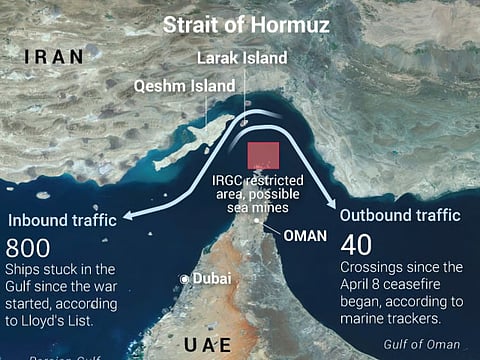

The United States has begun enforcing a naval blockade targeting Iranian ports along the Strait of Hormuz, escalating tensions despite a fragile ceasefire with Tehran. The move follows the failure of weekend talks between Washington and Iran, raising fresh uncertainty over global energy flows and trade.
According to the US Central Command, the blockade covers Iran’s entire coastline, including key ports and oil terminals.
Vessels entering or leaving Iranian ports without authorisation may be intercepted or seized
Humanitarian cargo such as food and medicines will be allowed, subject to inspection
Neutral transit through the Strait of Hormuz will not be blocked
This means ships bound for non-Iranian destinations can continue to pass, though the situation remains fluid.
Donald Trump said the move was aimed at tightening pressure on Tehran, adding that countries including China “would like to see this ended”.
He also warned that any Iranian vessels approaching the blockade could be “eliminated”, signalling a hardening stance.
Iran responded with strong warnings. Military officials said any threat to Iranian ports would make other Gulf ports unsafe, raising the risk of wider escalation across the region.
Diplomatic efforts are still under way to prevent a return to full-scale conflict. Pakistan Prime Minister Shehbaz Sharif has continued mediation efforts, while China has called for maintaining the ceasefire and avoiding renewed hostilities.
Despite the tensions, backchannel talks are expected to continue in the coming days.
The blockade has intensified concerns over global energy supplies, as the Strait of Hormuz handles a significant share of the world’s oil shipments.
Oil prices briefly surged above $100 a barrel before easing
Shipping risks and insurance costs are rising
Global supply chains, especially in Asia, face potential disruption
US energy secretary Chris Wright said energy prices are likely to remain elevated until normal shipping resumes through the Strait.
Washington’s move has received little backing from allies.
UK Prime Minister Keir Starmer said Britain was not participating in the blockade and instead favoured efforts to reopen the Strait for free navigation.
France is pushing for a diplomatic solution, with President Emmanuel Macron expected to convene talks aimed at de-escalation.
Analysts say the lack of broad international support could complicate enforcement of the blockade.
Experts warn the situation remains highly volatile.
A prolonged blockade could tighten global oil supply
Iran may retaliate through asymmetric measures
Enforcement risks direct confrontation at sea
Some analysts argue the US lacks clear “escalation dominance”, meaning Iran could respond with equal or greater force if tensions rise further.
With the ceasefire set to expire soon, multiple scenarios remain possible:
Renewed negotiations and a limited agreement
Continuation of the current standoff
A return to military conflict
For now, markets and governments are closely watching developments in the Strait of Hormuz, a critical artery for global energy and trade.

