
The United States has deployed naval vessels through the Strait of Hormuz even as American and Iranian delegations engage in crucial talks in Islamabad to shore up a fragile ceasefire following weeks of conflict.
According to US media reports, several US Navy ships crossed the strategic waterway on Saturday — the first such movement since the outbreak of the US-Israel war on Iran. The passage was not coordinated with Tehran, signalling continued tensions despite diplomatic engagement.
US President Donald Trump said Washington was working to secure the vital shipping route “for countries across the world”, even as Iran has intermittently restricted access amid escalating regional hostilities.
Negotiations between the US and Iran are under way in Pakistan’s capital, with indications that the discussions may involve direct, face-to-face engagement, though official confirmation from the White House remains pending.
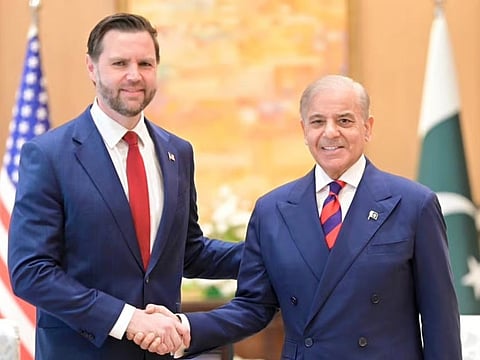
Pakistan Prime Minister Shehbaz Sharif held separate meetings with both delegations ahead of the talks, but no formal details have been disclosed.
The US team is led by Vice-President JD Vance, while Iran’s delegation includes senior leadership figures such as Parliament Speaker Mohammad Bagher Ghalibaf and Foreign Minister Abbas Araghchi.
Tehran has set key preconditions for substantive negotiations, including the release of frozen Iranian assets and a broader ceasefire that extends to Lebanon. While Washington has signalled partial acceptance, several issues remain unresolved.
Iranian officials have reiterated deep mistrust of the US, citing past “broken promises” and military actions during earlier diplomatic efforts. They have warned that failure to meet preconditions could derail the talks.
Uncertainty persists over the structure of the negotiations. Pakistani authorities have prepared for both direct talks and indirect “shuttle diplomacy”, where officials relay messages between delegations stationed in separate rooms.
Security in Islamabad has been significantly tightened, with authorities restricting movement in key areas and urging residents to remain indoors.
Although both sides agreed to a two-week ceasefire earlier this week, its durability remains in question. Iran has linked the truce to a broader regional de-escalation, including developments in Lebanon, while the US maintains that the agreement is limited to bilateral terms.
Washington has also instructed its military assets to remain positioned near Iran until a more durable agreement is reached.
The central sticking point continues to be Iran’s nuclear programme and US sanctions. Tehran insists on its right to pursue peaceful uranium enrichment, whereas Washington is demanding strict limits, including the removal of highly enriched uranium stockpiles.
Iran is also pressing for immediate sanctions relief, while the US favours a phased approach tied to verifiable concessions.
Analysts say these long-standing differences — rooted in decades of hostility since 1979 — are unlikely to be resolved quickly.
Experts believe the most realistic outcome of the current round of talks is simply avoiding a breakdown.
Maintaining the ceasefire through the proposed 14-day negotiation window is seen as the immediate priority, with any meaningful agreement likely to require prolonged engagement.

