
The announcement of a sharp cut in US tariffs on Indian goods has sparked optimism among exporters and market participants. However, trade policy experts in India are advising restraint, warning that the contours of the India–US trade deal remain unclear and largely undocumented.
The Global Trade Research Initiative (GTRI) has said that while Donald Trump’s statements suggest a major breakthrough, several claims lack official confirmation from the Indian side. According to GTRI founder Ajay Srivastava, this is a moment for careful scrutiny rather than celebration.
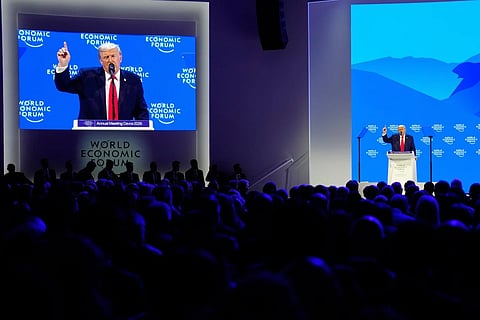
Trump said the US would immediately reduce tariffs on Indian goods to 18 percent following a phone call with Prime Minister Narendra Modi. Both leaders later posted positive messages on social media, signalling a reset in bilateral trade relations.
However, GTRI pointed out that there is still no official communication from New Delhi explaining:
The legal basis of the tariff cut
The products covered under the revised tariff rate
Whether the reduction applies uniformly or selectively
“Caution, not celebration, is warranted,” Srivastava said, stressing that clarity is essential before drawing conclusions.
In his Truth Social post, Trump made several far-reaching assertions about India’s commitments. These included:
India stopping purchases of Russian oil
A sharp increase in imports of US oil and gas
Possible sourcing of oil from Venezuela
Reduction of tariffs on US goods to zero
A commitment to purchase over $500 billion worth of US energy, technology and other products
GTRI noted that none of these claims has been officially confirmed by the Indian government, raising doubts about whether these are binding commitments or negotiating signals.
One of the biggest areas of uncertainty is the starting point of the tariff cut. Trump said tariffs would fall from 25 percent to 18 percent. However, earlier US statements had linked higher punitive tariffs — reportedly up to 50 percent — to India’s continued imports of Russian crude oil.
According to GTRI:
It is unclear whether the tariff reduction is from 25 percent to 18 percent, or from 50 percent to 18 percent
White House officials have indicated that the 25 percent tariff linked to Russian oil may be withdrawn
There is still no written confirmation on how these changes will be implemented
GTRI also cautioned that US tariff reductions with other countries have not meant blanket liberalisation. Current reciprocal tariff levels include:
10 percent for the UK
15 percent for the EU and Japan
19 percent for Indonesia and Malaysia
20 percent for Bangladesh and Vietnam
At the same time, several sector-specific duties will continue:
Section 232 tariffs of up to 50 percent on steel, aluminium, copper and related products
A 25 percent tariff on select auto components
Zero-duty treatment only for specific categories such as pharmaceuticals, aircraft, aircraft parts, and some mechanical and electronic goods
Trump also claimed that India would remove both tariff and non-tariff barriers on American products. GTRI said this assertion lacks detail and overlooks India’s long-standing resistance to opening sensitive sectors.
India has traditionally protected areas such as:
Food grains and agricultural commodities
Genetically modified products
Highly regulated imports linked to food safety and environmental concerns.
According to GTRI, any sweeping commitment in these areas could have far-reaching consequences for farmers, domestic industry and India’s regulatory autonomy.
Until official documents are released and Parliament is briefed, GTRI says the true scope of the India–US trade deal remains uncertain, making caution the most sensible response for now.
