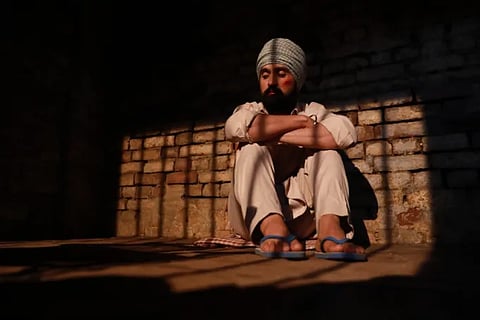

A film starring popular Punjabi singer and actor Diljit Dosanjh has become the centre of a fresh controversy after it was abruptly removed from streaming just two days after its release, reigniting debate over artistic freedom, censorship and the portrayal of one of India's most sensitive periods.
Satluj, inspired by the life of human rights activist Jaswant Singh Khalra, premiered on streaming platform ZEE5 on Friday but was withdrawn for Indian viewers by Sunday evening. The platform said the film would remain unavailable in India "until further notice" because of "current developments", without elaborating.
The move has drawn sharp criticism from filmmakers and free speech advocates, especially since the film had already endured years of delays and certification disputes before finally reaching audiences.
Completed in 2022, Satluj never reached cinemas because of a prolonged tussle with the Central Board of Film Certification (CBFC). Instead, the makers opted for a direct digital release on ZEE5.
However, barely two days after its release, the streaming platform removed the film from its Indian catalogue. Reports in Indian media, quoting the producers, said the film was taken down following government directions, although the Union government has not publicly confirmed or denied the claim.
ZEE5 said it continued to support the film and its creative vision and hoped to restore it in the future.
Speaking during a live social media session, Dosanjh said the team had anticipated obstacles but had not expected the film to disappear so quickly.
According to the actor, the makers deliberately kept publicity to a minimum because they feared extensive promotion might have prevented the film from being released altogether.
Despite the setback, Dosanjh expressed satisfaction that audiences had at least managed to watch the film after years of uncertainty.
The film is based on the life of Jaswant Singh Khalra, the activist who investigated allegations of enforced disappearances and secret cremations during Punjab's militancy years.
Between the early 1980s and the mid-1990s, Punjab witnessed a violent separatist insurgency led by militants demanding an independent Khalistan. Thousands of people were killed during the conflict as security forces launched a massive counter-insurgency campaign.
Human rights organisations alleged that numerous suspects were illegally detained, killed in fake encounters and secretly cremated. Authorities rejected many of those allegations, arguing that extraordinary measures were necessary to combat terrorism.
Khalra documented cases of unidentified cremations before he himself disappeared in 1995. Investigations later concluded that he had been abducted and murdered, leading to the conviction of several Punjab police officers.
The film's journey has been unusually difficult.
It was originally titled Ghallughara, a Punjabi word associated with historic massacres of Sikhs in the 18th century. During the certification process, the CBFC reportedly asked the filmmakers to change the title. It was subsequently renamed Punjab '95, referring to the year Khalra disappeared.
The production was also scheduled to premiere at the 2023 Toronto International Film Festival but was eventually withdrawn while certification issues remained unresolved.
Director Honey Trehan has said the CBFC initially suggested 21 changes, a number that later grew to more than 120 proposed cuts. According to the filmmaker, many of the requested edits involved removing references to real events, Khalra's identity and scenes depicting alleged police excesses.
Unlike theatrical releases, films released directly on streaming platforms do not require CBFC certification. They are instead governed by the Information Technology Rules, 2021, although authorities retain powers to order content removal under applicable laws.
The makers therefore chose to bypass cinemas and release the film digitally under its new title, Satluj.
On release day, director Honey Trehan said audiences would finally be able to watch the film substantially in its intended form, although the original title could not be retained.
That relief proved short-lived. Within 48 hours, the film disappeared from the platform for Indian viewers. Despite its brief availability, Satluj won widespread critical acclaim, with several reviewers describing it as one of the year's strongest Indian films.
Its sudden removal has once again raised difficult questions about censorship, the limits of artistic expression and the challenges filmmakers face when dealing with politically and historically sensitive subjects.

