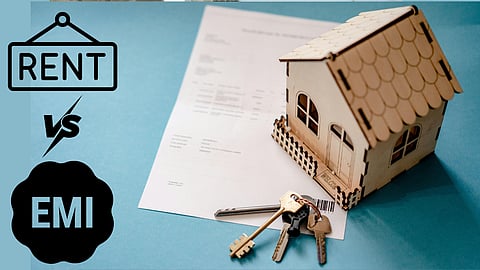

For many young Indians, the decision to buy a home often begins with a simple comparison: if the monthly rent is almost equal to what an EMI would cost, why not purchase a house instead? While the argument sounds convincing, financial planners have long warned that this comparison oversimplifies one of the biggest decisions in a person’s life.
In reality, rent and a home-loan EMI may look similar on paper, but their long-term impact on money, lifestyle and freedom is drastically different.
A home loan typically stretches over 15 to 20 years. That long commitment can restrict how people in their 20s and 30s manage major turning points—changing careers, moving to another city, pursuing higher studies, taking a break, or exploring opportunities abroad.
Renting, on the other hand, offers the flexibility to shift homes as income, family size or personal plans change. While tenants can exit with notice, homeowners remain tied to a fixed EMI that must be paid regardless of job stability, rising expenses or shifting priorities. A decision that feels manageable at age 30 may feel far heavier at 40 or 45, when responsibilities increase.
Many first-time buyers are attracted to under-construction projects because of their lower prices. But such projects are also where delays and uncertainties are the most common. A missed deadline can disrupt years of financial planning.
In several cities, buyers have found themselves paying EMIs for properties still stuck in construction hurdles—leaving families with years of financial strain and no immediate benefit. When delays happen, individuals end up facing a double burden: rent for their current accommodation and EMIs for a home they cannot yet use.
A home loan involves more than the EMI. Maintenance charges, repairs, property tax, furnishing costs, and periodic upgrades significantly increase the lifetime expense of owning a house. Over two decades, these costs—combined with the interest outflow—can push the total payout far beyond the property’s purchase price.
Meanwhile, rent, despite being an expense with no asset attached, remains predictable, short-term and free from the burden of long-term upkeep.
Many young buyers assume that real estate values will always rise steadily. But property appreciation is highly dependent on location, infrastructure growth, quality of construction, and market demand. In some areas, prices move sideways for years, delivering lower returns after adjusting for inflation.
Buying a house without assessing expected appreciation can leave families locked into an asset that grows slowly while income and responsibilities rise sharply.
In a culture that often equates homeownership with stability and success, renting is sometimes unfairly labelled a temporary or inferior choice. The truth is that renting preserves liquidity, allows mobility and protects individuals from rushing into long-term debt before they are financially prepared.
Young earners frequently experience rapid changes in income, goals and lifestyle. Renting keeps their options open, ensuring they can shift homes, cities or careers without being held back by a heavy financial obligation.
The decision to purchase a home should come from personal readiness, not social pressure or simplistic comparisons. Understanding long-term affordability, future plans, job stability and the true cost of ownership is essential before signing up for a decades-long loan.
Rent may look similar to an EMI, but the two represent entirely different financial journeys. For many, continuing to rent until life goals become clearer may be the more practical—and safer—choice.

