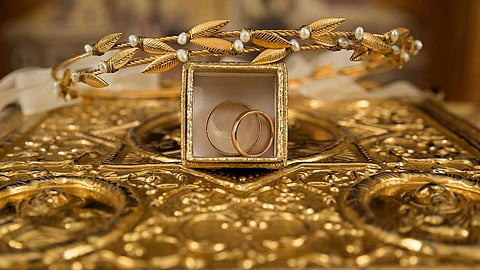

As India enters the wedding season, gold once again moves from bank lockers to homes and bridal trousseaus. This often raises a common question among families: how much gold can we legally keep at home without bills or purchase proof?
There is no fixed legal limit on how much gold an individual or family can own in India—as long as the source of the gold can be explained. This includes gold bought from declared income, as well as gold received through inheritance or gifts.
However, what most people refer to as “limits” actually come from CBDT (Central Board of Direct Taxes) non-seizure guidelines. These are used during income-tax search and seizure operations. They are not ownership limits, but quantities of jewellery that tax officials usually do not seize even if purchase documents are not available.
Under these guidelines, the following quantities of gold jewellery are generally not questioned:
Married woman: up to 500 grams
Unmarried woman: up to 250 grams
Men: up to 100 grams
For a Hindu Undivided Family (HUF), there is no fixed gram limit. Gold holdings are assessed based on the family’s income level, social status and customs.
These norms recognise Indian traditions such as weddings, ancestral jewellery and family gifting.
These limits apply only to immediate family members of the person facing a tax search
Jewellery belonging to non-family members, if found during a search, can be seized
The guidelines mainly come into play during tax raids, not routine assessments
According to market experts, for a typical family of three—a husband, wife and unmarried daughter—the acceptable holding works out to:
Wife: 500 grams
Husband: 100 grams
Daughter: 250 grams
That’s a total of 850 grams of gold.
At current 22-carat prices, this can be worth over ₹1.2 crore, even after accounting for making charges—legally held at home, without bills, provided it is household jewellery and not business stock.
Understanding these rules helps families to:
Avoid panic during income-tax searches
Separate traditional household jewellery from undisclosed income
Prevent costly mistakes caused by misinformation
Maintain peace of mind during weddings and family functions
Most problems arise when people assume all gold without proof is illegal, or at the other extreme, keep large unexplained holdings without any documentation.
Experts say you can legally hold any amount of gold if you can clearly explain the source—through:
Declared income over the years
Purchase invoices
Gift deeds mentioning occasion and donor
Inheritance documents or wills
If gold above the prescribed limits cannot be explained, it may be treated as unexplained investment. This can attract tax of up to 60 percent of the gold’s value, along with surcharge, cess, interest and penalties. In serious cases, confiscation is also possible.
These relaxed rules apply only to reasonable personal jewellery, not to:
Gold accumulated purely as an investment stash
Large quantities of bullion, coins or bars
Trading or speculative stockpiling without financial explanation
Bottom line: Household gold linked to tradition is largely protected—but documentation becomes crucial once you go beyond what is considered reasonable.

