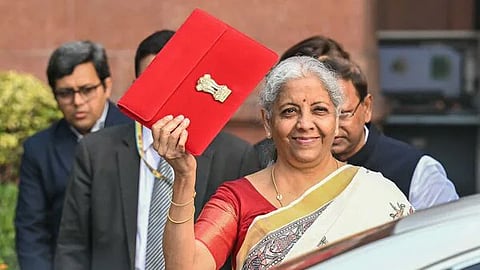

As India heads into the Union Budget for FY26–27, investors are bracing for heightened market volatility, a familiar feature in the run-up to the annual fiscal event. Historically, markets tend to turn cautious ahead of the Budget, reacting sharply to expectations around government spending, taxation and fiscal priorities. The Union Budget remains one of the most influential policy triggers for Indian equities, often reshaping sector leadership and near-term market trends.
This year, the Budget is widely expected to continue its emphasis on capital expenditure, manufacturing-led growth and macroeconomic stability, even as global uncertainties around growth, geopolitics and interest rates persist. With valuations stretched in certain segments and global cues mixed, experts say portfolio positioning ahead of February 1 has become critical.
Market experts broadly agree that diversification and balance should guide investment decisions ahead of Budget 2026. Rather than making aggressive sector-specific bets, analysts recommend maintaining exposure to stable large-cap stocks while complementing equities with defensive and alternative assets.
Apurva Sheth, head of market perspectives and research at SAMCO Securities, said investors should avoid taking directional calls ahead of the Budget. “We would recommend maintaining a balanced or hybrid portfolio,” he said. According to Sheth, an allocation of 50 percent to large-cap equities, 30 percent to gold, 10 percent to silver and 10 percent to bonds could help provide stability during policy-driven volatility.
From a technical standpoint, large caps are expected to offer relative strength during uncertain phases. Aakash Shah, technical research analyst at Choice Equity Broking, said portfolios should remain core-heavy on large caps, while selectively adding mid-cap stocks with strong technical setups. He suggested an allocation of 50–55 percent to large caps, 25–30 percent to select mid caps, with the remainder in cash or defensive positions to take advantage of post-Budget corrections.
While short-term volatility around the Budget is almost inevitable, experts stress that long-term asset allocation should not be ignored. Investors are advised to align portfolios with structural growth themes while ensuring adequate downside protection.
Vikas Gupta, CEO and chief investment strategist at OmniScience Capital, said diversified exposure remains essential in the current environment. “A portfolio with 75 percent allocation to equities, including 20–25 percent global equities, 20 percent to fixed income, REITs and InvITs, and around 5 percent to other assets such as gold and silver offers a resilient framework for the year ahead,” he said.
V K Vijayakumar, chief investment strategist at Geojit Investments Limited, echoed a similar view, emphasising stability over speculation. He advised investors to maintain a higher weightage to equities, moderate exposure to gold, lower allocation to fixed income, and keep large-cap stocks as the core holding ahead of the Budget.
As Budget 2026 approaches, experts agree that staying diversified, avoiding knee-jerk reactions and focusing on long-term fundamentals can help investors navigate near-term volatility while remaining well positioned to benefit from policy-led opportunities.
(By arrangement with livemint.com)

