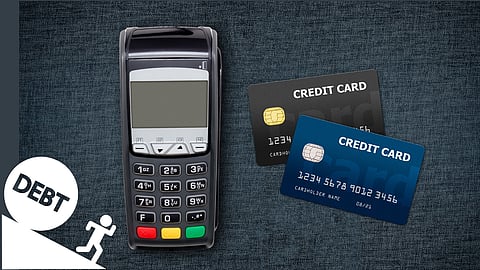

Many credit-card users wonder if they can clear the dues on one card by simply paying with another. Banks in India, however, do not allow this. The rule is fairly straightforward: credit-card bills must be paid from a bank account, not by swiping or charging another card. The idea is to stop borrowers from piling on more debt while trying to repay old debt.
Yet there are a couple of legitimate workarounds that cardholders can use — though each comes with conditions that need careful attention.
The most accepted way to shift dues from one credit card to another is the balance-transfer facility. Here, a new credit-card issuer pays off the outstanding amount on your old card and moves the entire balance to your new card.
Several major issuers offer this feature, sometimes with introductory interest rates or limited-period concessions. For many borrowers, balance transfers act as a structured way to manage heavy dues, especially when they are looking to consolidate their debt.
But even this comes with fine print — fees, tenure restrictions and bumped-up interest once the promotional period ends.
There is a more complicated option: taking a cash advance from one credit card, depositing that money into your bank account and then using it to pay the bill on another card.
Banks do not stop you from doing this, but it is widely discouraged. Cash advances begin accumulating interest the moment you withdraw money, there is no grace period and the charges can pile up far faster than most users expect. For anyone already struggling with dues, this method often pushes debt deeper rather than solving it.
Banks require that all credit-card payments — whether made online, through phone banking or via UPI — come from a verified bank account. Allowing one credit card to pay another would simply shift debt from one lender to another without actually reducing it.
Most third-party apps, wallets or UPI platforms also block these transactions for the same reason. Even when a payment appears to be possible, it usually routes through a bank account, not the card itself.
For those temporarily short on funds, a balance transfer remains the cleanest and most recognised option. But borrowers need to understand the fees and future interest charges before signing up.
Cash advances and other workaround ideas may seem tempting, but they usually turn out to be the costliest way to manage debt. As banks tighten their checks on circular debt, responsible repayment habits — not shortcuts — remain the safest way to protect your credit health.

