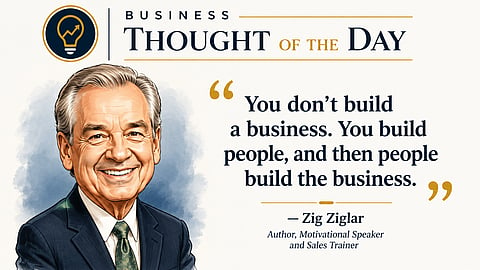

You don't build a business. You build people, and then people build the business-- Zig Ziglar, author of See You at the Top
Every entrepreneur dreams of building a successful company. Many focus on raising capital, acquiring customers, expanding into new markets or adopting the latest technology. Yet businesses that endure for decades usually have one thing in common: they invest in people before profits. Skilled, motivated and trusted employees create better products, serve customers more effectively and drive innovation that no machine or strategy alone can deliver.
This idea is becoming even more relevant in today's business environment. Artificial intelligence is transforming industries, but organisations still depend on human judgement, creativity, empathy and leadership. Technology can automate tasks, but it cannot replace a team that is committed to a shared vision. Companies that nurture talent, encourage learning and empower employees are better equipped to adapt to change and outperform competitors.
Many of the world's most successful organisations have embraced this philosophy. Businesses such as Toyota, Infosys and Southwest Airlines have consistently invested in employee development, leadership training and workplace culture. Their long-term success demonstrates that people are not merely a business expense; they are the greatest asset any organisation possesses.
For entrepreneurs, especially those leading small and medium-sized enterprises, this lesson is particularly valuable. Recruiting talented individuals is only the beginning. Retaining them requires trust, recognition, opportunities for growth and a workplace where ideas are welcomed. Employees who feel valued often become the company's strongest ambassadors, helping attract customers, solve problems and create new opportunities.
Young professionals can also draw inspiration from Ziglar's words. Building oneself—through continuous learning, discipline, integrity and communication skills—is the first step towards building a successful career. The more capable and dependable a person becomes, the greater the value they bring to any organisation. Career success is rarely built on qualifications alone; it is built on character, competence and the willingness to keep improving.
In a world obsessed with quarterly results and rapid growth, Ziglar's message is a reminder that sustainable success starts with investing in people. Businesses may begin with an idea, but they flourish because of the individuals who bring that idea to life every day.
Zig Ziglar (1926–2012) was one of America's most influential motivational speakers, sales trainers and authors. Born in Alabama and raised in Mississippi during the Great Depression, he experienced hardship from an early age after losing his father when he was just five years old. Those early struggles shaped his optimistic outlook and his lifelong belief that perseverance, integrity and self-improvement could transform lives. Before becoming a renowned speaker, Ziglar spent many years working as a salesman, where he developed the communication and leadership skills that later became the foundation of his teachings.
Over a career spanning more than four decades, Ziglar wrote over 30 books, including the best-selling See You at the Top, which inspired millions of readers worldwide. His seminars attracted business leaders, entrepreneurs and sales professionals seeking practical guidance on achieving success without compromising ethics or personal values. Unlike many motivational speakers who focused solely on wealth or ambition, Ziglar consistently emphasised honesty, service, personal growth and helping others succeed. His ideas continue to influence executives, educators and aspiring entrepreneurs around the world, making his wisdom as relevant today as it was decades ago.

