
US semiconductor giant Nvidia has announced plans to buy back an additional $150 billion worth of its own shares. This is billed as the largest stock repurchase programmes in corporate history and the company continues to benefit from the global race to build artificial intelligence (AI) infrastructure.
The announcement comes four months after Nvidia’s board approved an additional $80 billion increase in its buyback authorisation. With the new approval, the company now has $235 billion available under its remaining share repurchase programme.
Nvidia CEO Jensen Huang said the company’s growth is being driven by a major shift towards AI and accelerated computing.
The company said its strong cash generation allows it to continue investing in new technologies while also returning capital to shareholders.
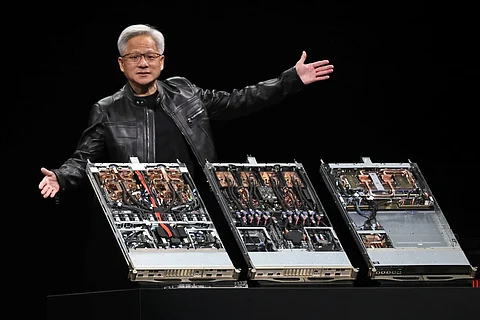
Nvidia has emerged as the biggest beneficiary of the global AI expansion, with its graphics processing units (GPUs) becoming essential components for large-scale AI data centres operated by technology companies worldwide.
The company’s chips power the training and operation of advanced AI models, making Nvidia a key supplier in the rapidly expanding AI ecosystem.
The surge in demand has pushed Nvidia’s market capitalisation to around $5.6 trillion, making it the world’s most valuable publicly listed company.
Nvidia shares gained nearly 4% following the buyback announcement as investors continued to bet on the company’s long-term AI growth prospects.
Share buybacks are often used by companies to return excess cash to investors. By reducing the number of shares available in the market, buybacks can increase earnings per share and potentially support stock prices.
However, critics argue that large-scale repurchases may divert funds away from areas such as hiring, research and development, and business expansion.
According to analysts, buybacks can also indicate that a company believes its shares are undervalued and reflects management’s confidence in future growth.
For Nvidia, the move comes amid debate over whether the massive investments flowing into AI companies have created excessive valuations.
Nvidia’s latest buyback decision follows a period of exceptional financial performance. The company reported quarterly revenue of $96.22 billion for the quarter ended July, more than double the previous year’s figure. Three years ago, Nvidia’s quarterly profit stood at $6.2 billion.
The company has also projected revenue of $108 billion for the current quarter, representing around 90% growth compared with the same period last year.
Nvidia expects to complete the remaining buyback programme by the end of its fiscal year 2028, which concludes in January 2028.
Large-scale share buybacks have traditionally been associated with mature technology companies that generate significant free cash flow.
Apple, one of the biggest users of buyback programmes, announced a $110 billion share repurchase plan in 2024.
With its latest move, Nvidia is adopting a similar capital-return strategy while still operating in a high-growth phase driven by AI demand.
Nvidia’s record buyback reflects the enormous financial momentum behind AI. Technology companies are investing billions of dollars in data centres, computing infrastructure and AI models to secure a leading position in the emerging market.
As demand for AI chips continues to rise, Nvidia’s ability to generate cash while maintaining its dominance in the semiconductor industry remains closely watched by investors worldwide.

