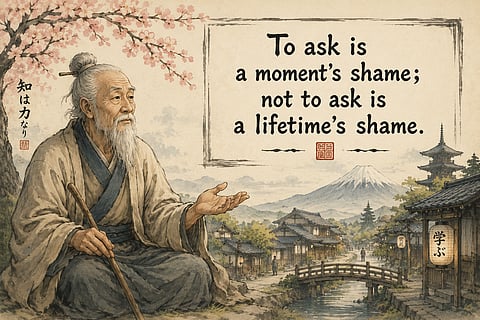

To ask is a moment’s shame; not to ask is a lifetime’s shame.
This Japanese proverb offers a timeless lesson on the value of curiosity, learning and humility. Though centuries old, the saying remains deeply relevant in modern life, where people often hesitate to ask questions for fear of appearing uninformed.
The proverb reminds us that a brief moment of embarrassment is far better than living with confusion, ignorance or missed opportunities for years.
The saying highlights a simple but powerful truth: asking questions may feel uncomfortable for a moment, but refusing to ask can leave a person without the right knowledge for a lifetime.
Many people avoid seeking clarification because they worry about looking inexperienced or lacking understanding. However, silence often leads to mistakes, uncertainty and poor decisions.
The proverb encourages people to value learning above pride. It teaches that there is strength, not weakness, in admitting when something is not understood.
Today’s fast-moving world often creates pressure to appear confident and knowledgeable at all times. Social media, competitive workplaces and constant public visibility can make people feel they must already know every answer.
This proverb offers a more meaningful perspective. It reminds people that growth begins with learning, and learning begins with asking questions.
In workplaces, asking for clarification can prevent costly errors. In classrooms, students who ask questions usually gain deeper understanding and stronger confidence. In personal life too, open communication helps avoid misunderstandings and unnecessary stress.
The lesson of the proverb is straightforward: never hesitate to ask for help, guidance or explanation.
Whether learning a new skill, beginning a job or handling personal challenges, asking questions often makes situations easier and clearer. People who actively seek advice and knowledge tend to become wiser and more capable over time.
Avoiding questions out of fear, on the other hand, can create larger problems later.
The proverb remains relevant because lifelong learning has become more important than ever. Technology, workplaces and society are evolving rapidly, making continuous learning essential.
Even with unlimited information available online, many people still hesitate to ask direct questions. This Japanese saying serves as a reminder that fear and pride should never stand in the way of knowledge.
A similar proverb expresses the same idea clearly: “He who asks a question remains a fool for five minutes; he who does not ask remains a fool forever.”
Both sayings carry the same enduring message — temporary embarrassment is always better than lasting ignorance.

