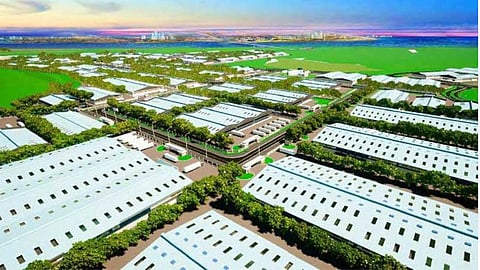

India’s special economic zones appear to be going through a period of mixed fortunes. Official data tabled in the Lok Sabha shows that 466 units across seven SEZs shut down in the five years leading up to FY25. The trend has gained attention at a time when India’s goods exports have been hit by US tariff actions, leading to consecutive declines in September and October.
In FY25 alone, 100 units closed, making it the second worst year after FY22, when Covid-led disruptions forced the exit of 113 units. Employment inside SEZs also slipped to 31.77 lakh in FY25 from 31.94 lakh the previous year, hinting at wider structural challenges despite a steady rise in exports.
SEZs were originally designed to mirror the success of China’s export hubs, offering fiscal incentives such as duty-free imports and domestic procurement. Globally, SEZs are known to boost labour-intensive sectors and attract foreign investors. China’s zones evolved into manufacturing powerhouses. India’s experience, however, has been far more uneven.
Despite the closures, exports from SEZ units have climbed over the past five years. They have doubled to ₹14.63 lakh crore in FY25 compared with ₹7.59 lakh crore in FY21. Investments have also shown a cautious improvement, inching up from ₹6.17 lakh crore in FY21 to ₹7.82 lakh crore in FY25. Policymakers see this as a positive sign, though concerns over low R&D investment and rising competition from countries such as Vietnam continue to cloud the outlook.
The commerce ministry has been working on SEZ reforms for nearly three years and is expected to announce fresh measures ahead. Responding to questions in Parliament, minister of state for commerce and industry Jitin Prasada said the government regularly engages with stakeholders to remove operational bottlenecks. He said measures such as permitting reverse job work and specific regulatory tweaks are introduced “as and when needed”, suggesting that the reform process is likely to be incremental rather than sweeping.
A survey by the Indian Council for Research on International Economic Relations points to several reasons behind India’s struggle to attract higher levels of foreign investment into SEZs. The lack of strong investment-protection agreements—unlike countries such as Vietnam—continues to deter investors, the survey suggests. Perceptions around policy uncertainty and limited marketing of India’s SEZ ecosystem also appear to weigh on investor confidence.
The survey highlights productivity-linked challenges as well. Before 2019, SEZs hosted nearly 500 gems and jewellery units. That number has fallen sharply, touching around 360 by FY22. Their share in SEZ exports also dropped to 15.7% in FY21. Analysts cite a mix of reasons: better non-fiscal incentives abroad, withdrawal of fiscal benefits in India, pandemic disruptions, and persistent uncertainty around SEZ-related policy.
While exports and investments within SEZs continue to rise, the closure of units and the dip in employment indicate an ecosystem that may not be functioning at full potential. Policymakers appear confident that reforms can help restore momentum, but the pace and scale of those changes remain to be seen. For now, the SEZ model sits at an interesting crossroads — delivering strong export numbers while grappling with structural gaps that could shape its next phase.

