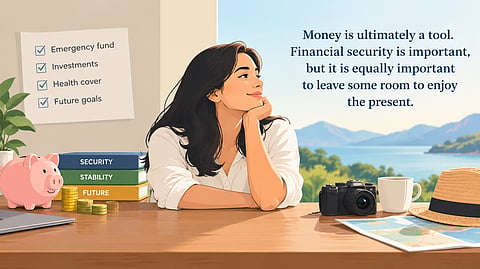

Saving and investing are essential for financial security. But if every rupee left after your regular expenses goes straight into savings, you may end up postponing the very experiences that make financial freedom meaningful.
Once your essential expenses are covered, you have an adequate emergency fund, insurance is in place and your long-term financial goals are on track, it is reasonable to spend some money on comfort and enjoyment.
The key is to spend deliberately — on things that improve your quality of life rather than on purchases made to impress others.
Here are some luxuries worth considering.
If every holiday has been about finding the cheapest option or squeezing in as much as possible, it may be time to spend a little more for comfort.
Plan a trip you genuinely look forward to. It could be a relaxing break within Keralam or an overseas holiday you have been postponing for years.
Consider spending on:
Convenient flight or train timings
Comfortable accommodation
Experiences that genuinely interest you
A slower itinerary rather than trying to cover every attraction
If travelling with parents or family has been a long-standing wish, this could also be the right time to make it happen.
The objective is not to spend lavishly for the sake of it. It is to create memories without borrowing money or disrupting your financial plan.
Luxury does not always mean an expensive holiday or a premium car. Sometimes, it is simply coming home to a comfortable space.
If you spend several hours working from home, for example, a good chair and proper lighting may be more valuable than another piece of decorative furniture.
You could consider spending on:
A better mattress or ergonomic chair
Good lighting and curtains
Better cooling or ventilation
Appliances that make everyday tasks easier
A small upgrade to your favourite room
Focus on things that solve problems you encounter regularly. You do not have to renovate your entire home or buy the most expensive product available.
A purchase that improves your comfort every day can offer more value than something that looks impressive but is rarely used.
Time may be one of the most valuable luxuries money can buy.
If household chores consume your evenings and weekends, consider paying for services that free up some of that time. Depending on your needs, this could mean hiring domestic help, a cook or using a laundry or cleaning service occasionally.
The important question is: what would you do with the time you save?
You could spend it with family, exercise, pursue a hobby, rest or simply have an uninterrupted evening.
However, make sure the expense is sustainable. There is little value in paying for convenience today if it forces you to cut investments or dip into savings next month.
Not every rupee you spend needs to generate a financial return.
Perhaps you have always wanted to learn music, pottery, photography or swimming. Maybe you once enjoyed painting but stopped because work and family responsibilities took priority.
If your finances allow it, give yourself permission to spend on an activity simply because you enjoy it.
You could pay for:
A good course or workshop
Suitable equipment
Memberships or classes
Short-term experiences to test an interest
Start small before committing to expensive equipment or a long-term course.
A hobby does not have to become a side business, improve your résumé or earn you money. Sometimes, enjoyment itself is a good enough reason.
Food is another area where spending a little more occasionally can create lasting memories.
You could take your family to a restaurant you have wanted to try, arrange a special meal at home or celebrate an important occasion with a more elaborate dinner.
The occasion does not have to be a birthday or anniversary. A rare evening when everyone is free can be reason enough.
The focus should be on the experience and the people, not on choosing the most expensive restaurant.
Put the phones away, take your time and enjoy the conversation. A meaningful meal with family or friends can be more valuable than another impulse purchase.
Enjoying your money does not mean abandoning financial discipline.
Before spending on luxuries, make sure you have covered the basics:
Regular household expenses are comfortably funded
Adequate emergency savings are available
Essential insurance protection is in place
High-cost debt is under control
Long-term goals such as retirement and children's education are on track
Regular investments are continuing as planned
Once these foundations are secure, it is perfectly reasonable to allocate some money towards experiences, comfort and personal happiness.
The idea is not to spend everything you have. It is to avoid turning saving into an end in itself.
Money is ultimately a tool. Financial planning should create security for the future while also leaving room to enjoy the present.

